
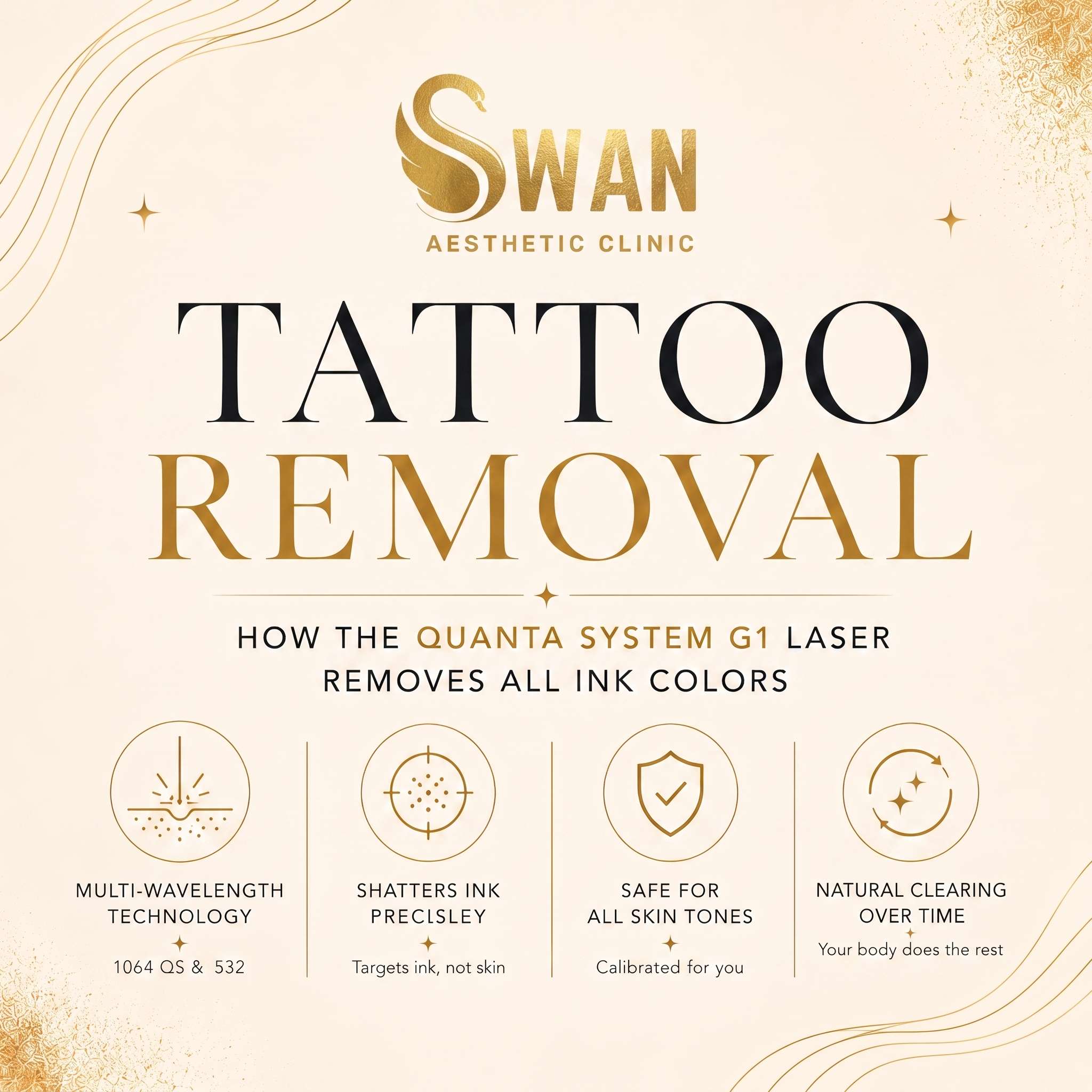
Tattoo Removal Dubai: How the Quanta System G1 Laser removes all Ink Colors
A name that meant something at twenty-three does not always mean the same thing at thirty-four. That shift, more than regret exactly, is what brings most people into a consultation asking about tattoo removal in Dubai. Some are covering a name. Some are preparing for a new job that has a policy on visible ink. Others simply want their skin back the way it was before the decision was made.
The honest answer to whether removal is possible depends on more than most people expect. Ink color, depth, density, and the client’s own skin tone all shape the outcome, and in a city where sun exposure is constant and skin tone shifts seasonally, timing matters almost as much as technology.
What the Quanta System G1 actually does
At Swan Aesthetic Clinic, tattoo removal runs on the Quanta System G1, branded in clinic as the Chrome laser platform. Chrome operates across multiple wavelengths, including 1064 QS and 532, which means black and dark blue ink respond to one setting while reds, oranges, and purples need another entirely. A single-wavelength device simply cannot do both well.
The mechanism is selective photothermolysis. Short, high-intensity pulses of light are absorbed by the ink particles sitting beneath the skin’s surface. That energy shatters the particles into fragments small enough for the body’s own lymphatic system to clear gradually over the following weeks. Because the laser is calibrated to the ink’s specific absorption wavelength rather than to skin tissue itself, the surrounding area is largely undisturbed.
Is it safe for clients with deeper skin tones? Yes, when the calibration is right. The system’s wavelength range and adjustable fluence allow a practitioner to treat all Fitzpatrick skin types, managing the risk of pigment changes by adjusting parameters rather than assuming darker skin means fewer options. That distinction matters in a clinic where skin tone variation among clients is significant, partly from ethnicity and partly from how much sun a person’s skin carries by the time they walk in.
What determines the plan
No two tattoos clear at the same rate, and pretending otherwise sets clients up for disappointment. A few factors decide how a treatment plan takes shape, and understanding them before the first session makes the process far less abstract.
- Ink density and layering. Professionally applied tattoos with heavy saturation take longer to clear than lighter or amateur work.
- Color composition. Black responds fastest. Reds, greens, and yellows are more resistant and often need more sessions at a different wavelength.
- Tattoo age. Older ink that has already faded naturally tends to respond faster than something applied recently.
- Skin tone and current sun exposure. A tanned or sun-stressed treatment area on the day of a session usually means postponing, not pushing through.
None of these factors are fixed rules. They are starting points a practitioner uses to build a realistic plan, and the plan itself gets refined as the skin responds to the first one or two sessions.
Living in Dubai changes the timeline, not the treatment
Dubai’s climate adds a layer that clinics in cooler cities do not have to think about as much. UV exposure here stays high for most of the year, and the constant movement between air-conditioned interiors and outdoor heat keeps skin in a near-permanent state of adjustment. That has a direct effect on tattoo removal scheduling. If a treated area is visibly tanned, the session gets pushed back, since treating sun-affected skin raises the risk of uneven pigment response.
The heat also shapes aftercare in ways worth planning for in advance. Tight clothing over a freshly treated area, long stretches in a sauna or steam room, or intense outdoor activity in the hours after a session can all interfere with recovery. None of this is unique to any one clinic. It is simply what treating skin responsibly looks like in a climate this demanding.
For clients balancing tattoo removal with other treatments, such as laser hair removal, scheduling both around the same period requires care. Running two laser-based treatments too close together stresses skin that is already working overtime against UV exposure, so this is worth raising directly at the consultation.
Aftercare that actually matters
Redness and mild swelling in the treated area are expected immediately after a session, and both usually settle within a few days. The area should stay clean, out of direct sun, and protected with a broad-spectrum SPF once the skin has calmed enough to tolerate it. Active skincare ingredients get paused until the skin has fully recovered, and picking at any surface reaction, however tempting, only slows the process down.
Demand for removal itself is not a small or fringe category. A 2024 clinical evaluation published in the Journal of Cosmetic Dermatology found that demand for tattoo removal has risen sharply over the past decade as tattoo prevalence itself has grown. That trend tracks closely with what shows up in consultations here: fewer people arriving with regret, more arriving with a simple decision that the ink no longer fits where their life is now.
Who tends to book this
The range of people asking about removal is wider than the stereotype suggests. Some are preparing for a wedding season packed with events where every photograph matters. Others are shifting into a new career with different expectations around visible ink. A smaller group is not seeking full removal at all, but partial fading to prepare the skin for a cover-up design. Clients interested in supporting overall skin recovery during the process sometimes pair removal with skin booster treatments, particularly if resilience and hydration are already a concern before treatment starts.
Starting the conversation at Swan Aesthetic Clinic Dubai
There is no universal number of sessions, and any clinic promising one before seeing the tattoo in person is guessing. What actually helps is an honest consultation: an assessment of the ink’s color composition, density, and age, alongside the client’s skin type and sun exposure history. From there, a plan takes shape around what the tattoo actually needs rather than a generic timeline borrowed from someone else’s skin.
Clients ready to start that conversation can book a consultation and get a realistic picture of what removal looks like for their specific tattoo, not an average one.
Read Recent Articles

Tattoo Removal Aftercare in Dubai: What to do in the 48 hours after your session
The first two days after a tattoo removal session decide more about the final result than almost any
Colored Tattoo Removal in Dubai: Red, Orange, and Blue Ink Explained
Black ink fades in a fairly predictable way. Color does not. Anyone who has watched a black-and-grey
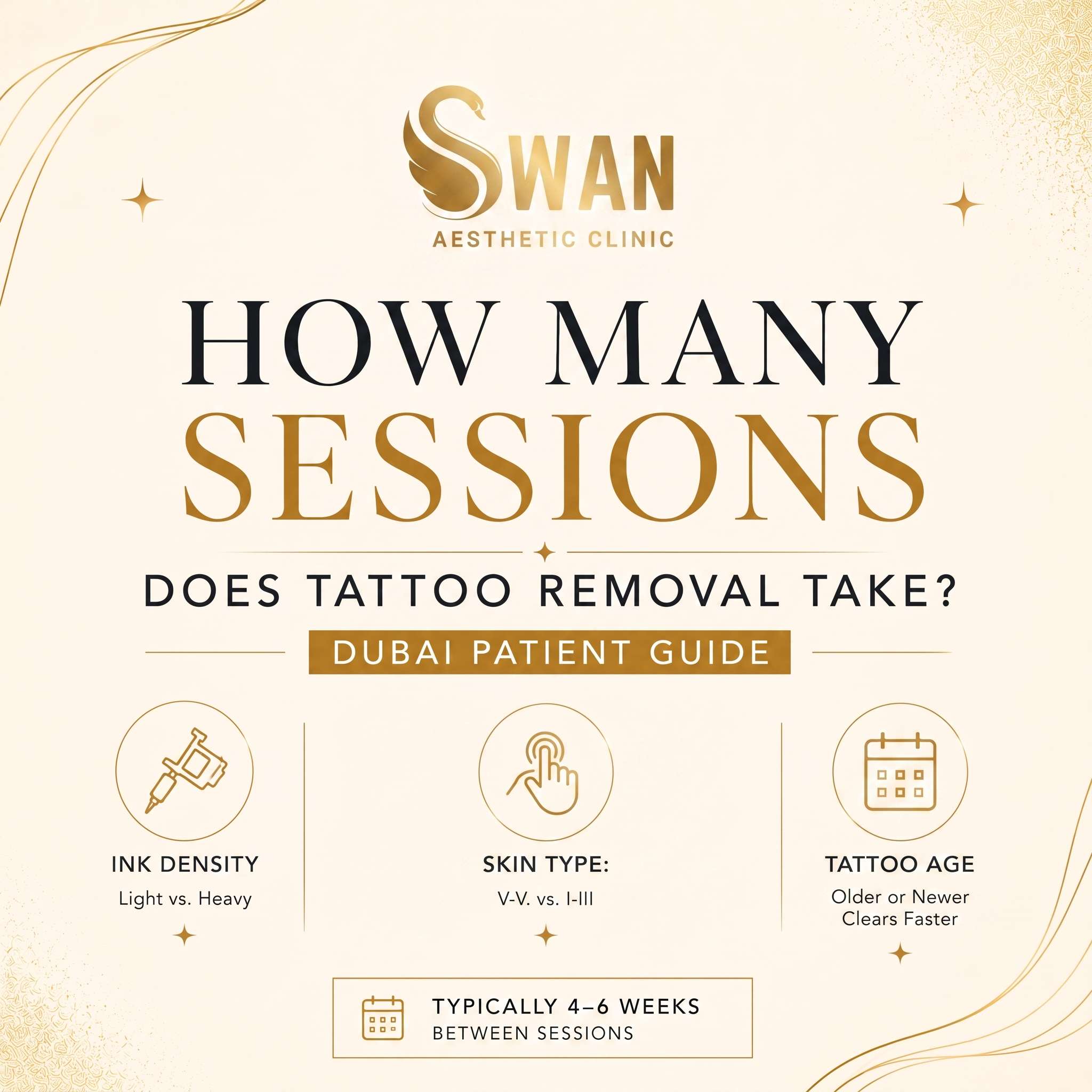
How Many Sessions does Tattoo Removal take? Dubai Patient Guide
Six is the number most people hear first, and for a good number of tattoos it holds up. For others i


