
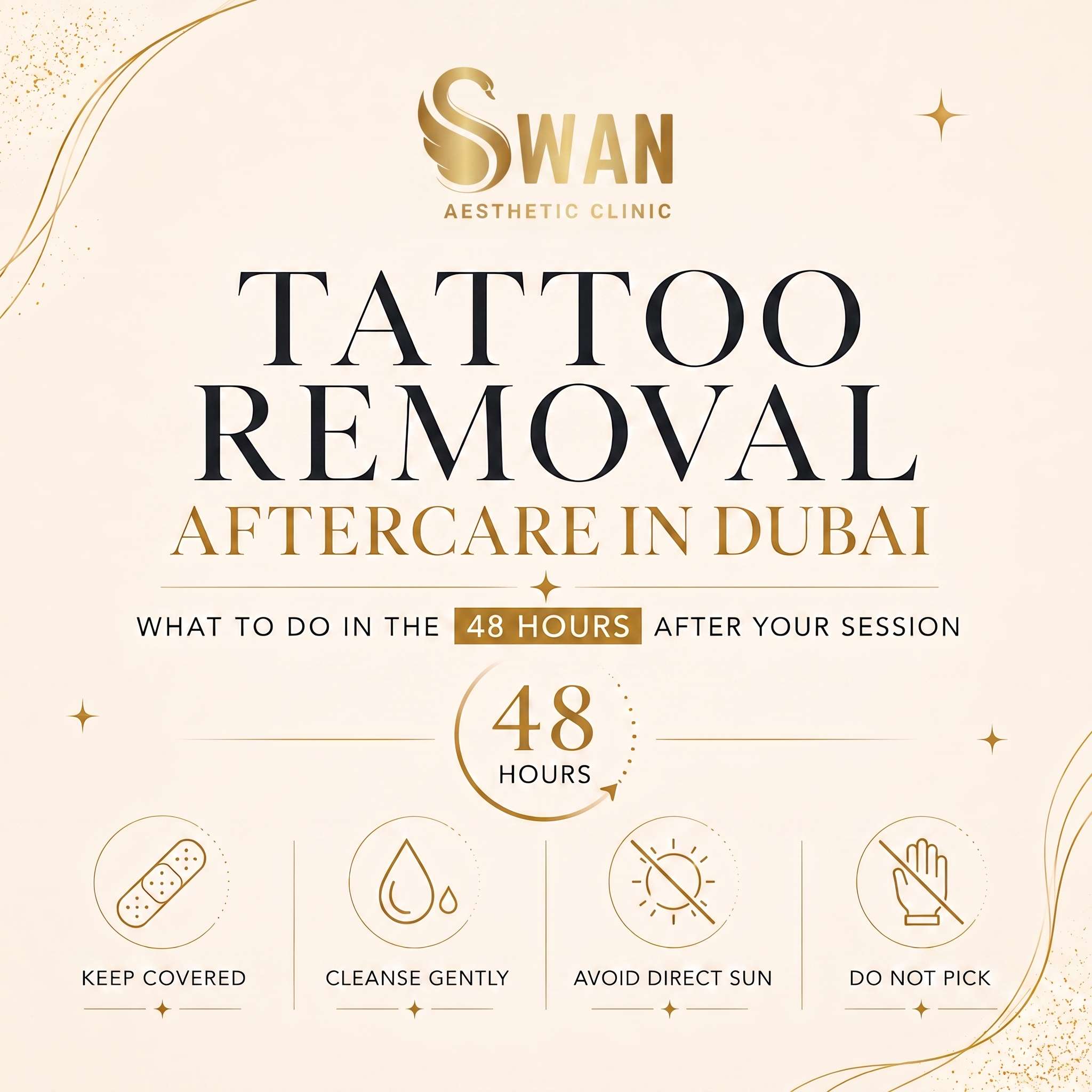
Tattoo Removal Aftercare in Dubai: What to do in the 48 hours after your session
The first two days after a tattoo removal session decide more about the final result than almost any other stretch of the entire process. Get them right, and the skin heals cleanly. Get them wrong, and a treatment that went perfectly in the clinic chair can still end in scarring or uneven fading.
Tattoo removal aftercare in Dubai carries extra weight because of how much this climate works against careless recovery. UV exposure, heat, and humidity are constants here in a way that clinics in cooler countries rarely have to plan around, and the first 48 hours are exactly when treated skin is at its most vulnerable to all three.
What the skin is actually doing right after treatment
A 2024 continuing medical education review published in the Journal of the American Academy of Dermatology, examining methods, techniques, and complications across laser tattoo removal, emphasized that safety considerations and complication management are as central to good outcomes as the choice of laser itself. That framing matters here specifically. The technology does its job in the treatment room. What happens afterward determines whether that work holds.
Immediately after a session, the treated area will look red and slightly swollen, sometimes with a whitish frosting effect that fades within the first hour or so. This is the skin’s immediate inflammatory response, and it is entirely expected rather than a sign of a problem.
Hour by hour through the first two days
In the first few hours, keeping the area covered with the dressing applied at the clinic protects it from friction and airborne contact. A cold compress, wrapped rather than applied directly to skin, can ease swelling during this window.
By the following day, gentle cleansing becomes appropriate. Lukewarm water and a mild, fragrance-free cleanser, followed by a thin layer of a recommended healing ointment, supports the skin without introducing anything that could irritate it further. Hot water, vigorous scrubbing, or anything remotely abrasive has no place in this stage of recovery.
By the second day, some blistering or crusting may appear as part of the natural process. Picking, scratching, or popping any of this is the single most common cause of scarring after tattoo removal, and it is entirely avoidable simply by leaving the area alone and letting it resolve on its own timeline.
Why Dubai’s climate raises the stakes on every one of these steps
Sun exposure on freshly treated skin, even brief exposure during a short walk outdoors, raises the risk of hyperpigmentation significantly more here than in a climate with lower baseline UV intensity. The treated area needs to stay fully covered and out of direct sun for at least the first two weeks, not just the initial 48 hours, though that first window is when the skin is most reactive.
Heat compounds the risk further. Saunas, steam rooms, and even prolonged time in a hot car can aggravate healing skin in ways that go beyond simple discomfort. Sweating heavily onto a freshly treated area, whether from intense exercise or simply Dubai’s outdoor heat, introduces both irritation and infection risk that recovering skin does not need.
A short, practical list of what actually matters in these first two days makes the process far less overwhelming to follow in the moment.
- Keep the dressing on for the time specified by your practitioner. Removing it too early exposes healing skin unnecessarily.
- Cleanse gently, once daily, with lukewarm water. Anything harsher disrupts the healing surface.
- Avoid direct sun entirely, not just during peak hours. Dubai’s ambient UV exposure adds up even on an overcast day.
- Do not pick at blisters or crusting. This single habit accounts for the majority of avoidable complications.
Following these consistently through the full recovery window, not just the first two days, is what separates clean fading from complications that extend the entire treatment timeline.
What happens after the initial healing window
Once the immediate 48-hour period passes, ongoing SPF protection and avoiding other laser treatments on the same area remain relevant for weeks, particularly for anyone also considering laser hair removal in the same season. Clients focused on skin recovery sometimes add skin booster support between removal sessions to help the skin bounce back more comfortably across a longer treatment course.
Recovering well with Swan Aesthetic Clinic Dubai
The laser does the work of breaking down the ink. What happens in the following 48 hours determines whether that work shows up as clean, even fading or as a complication that sets the whole timeline back. Anyone starting or continuing a removal course who wants clear, specific aftercare guidance for their own skin can get in touch here.
Read Recent Articles
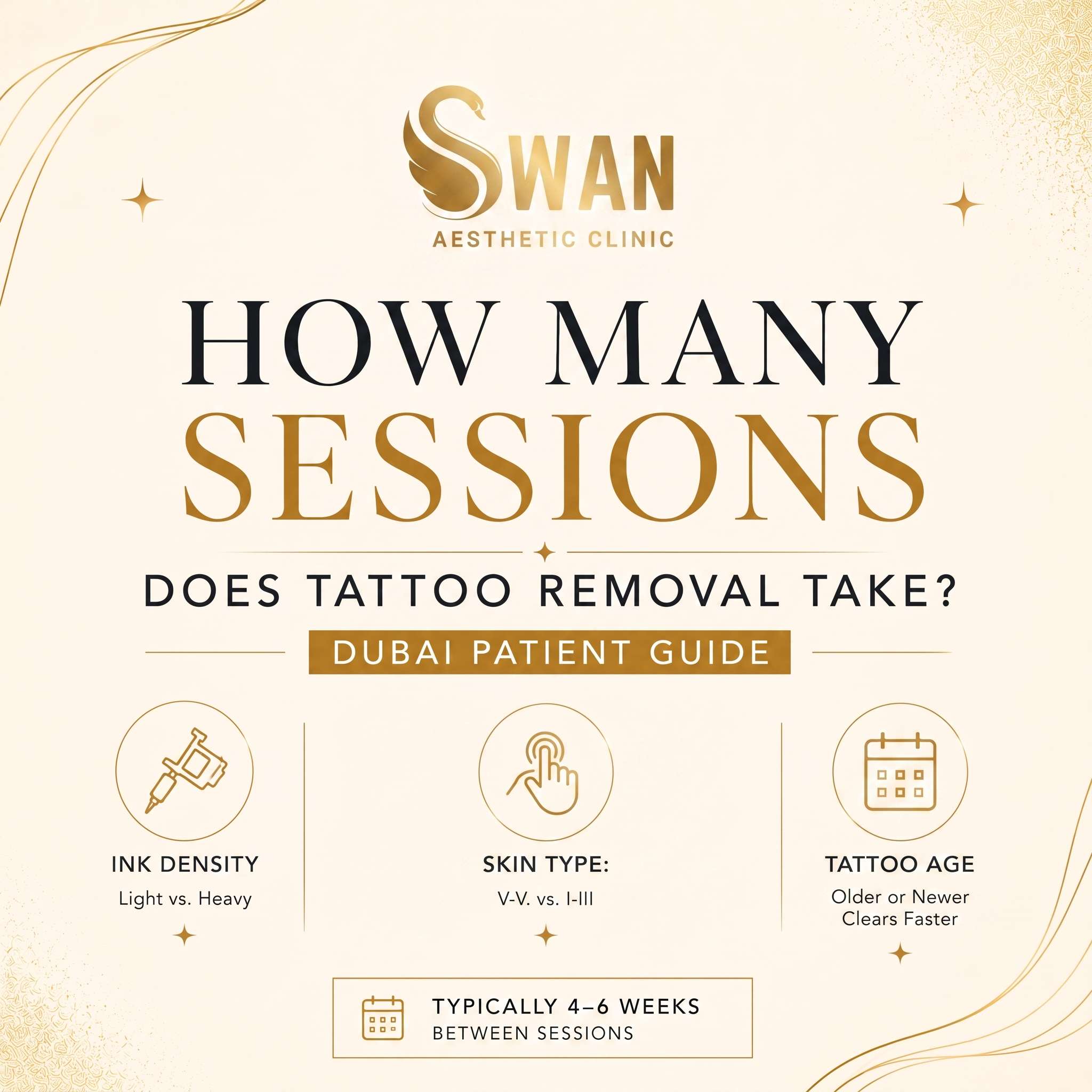
How Many Sessions does Tattoo Removal take? Dubai Patient Guide
Six is the number most people hear first, and for a good number of tattoos it holds up. For others i
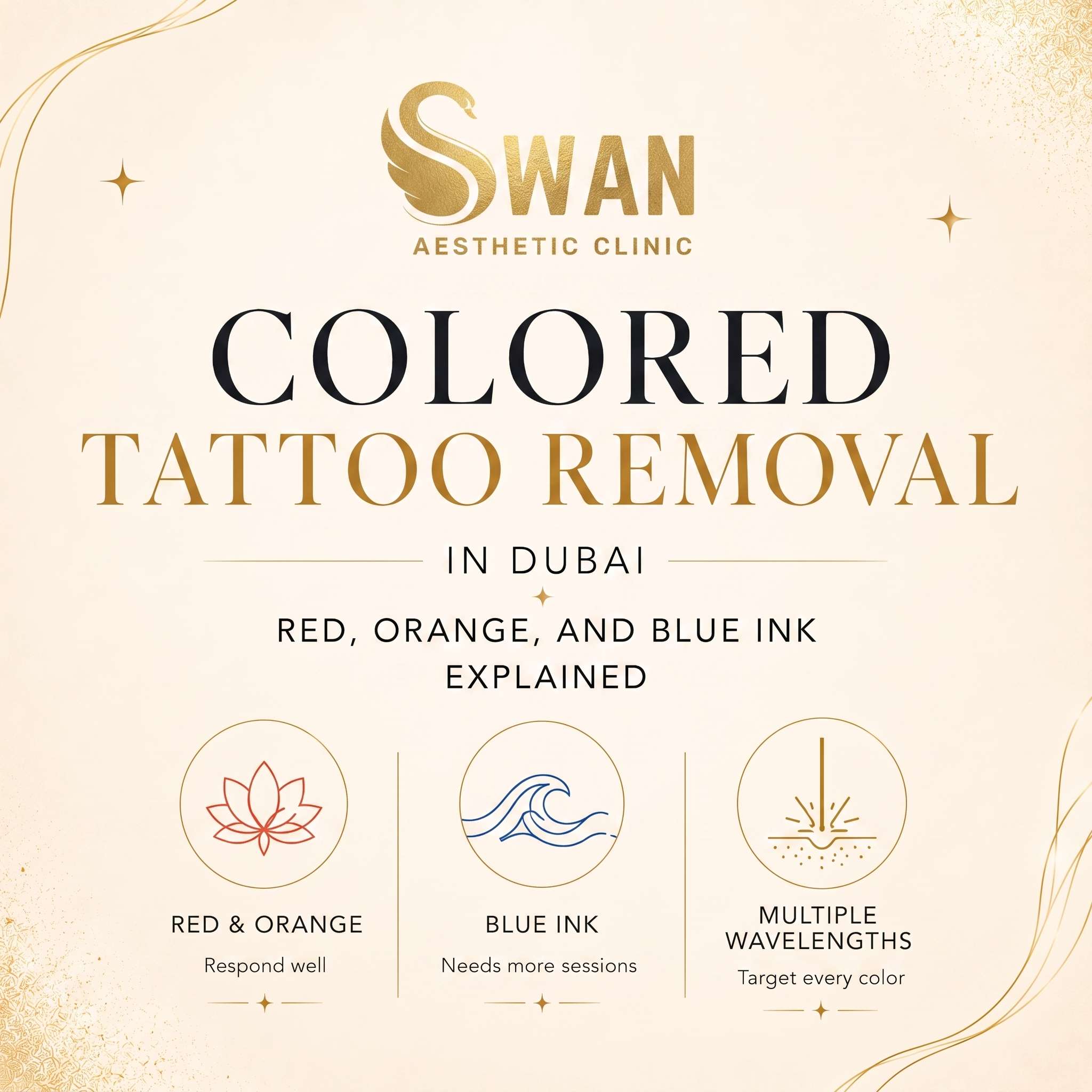
Colored Tattoo Removal in Dubai: Red, Orange, and Blue Ink Explained
Black ink fades in a fairly predictable way. Color does not. Anyone who has watched a black-and-grey
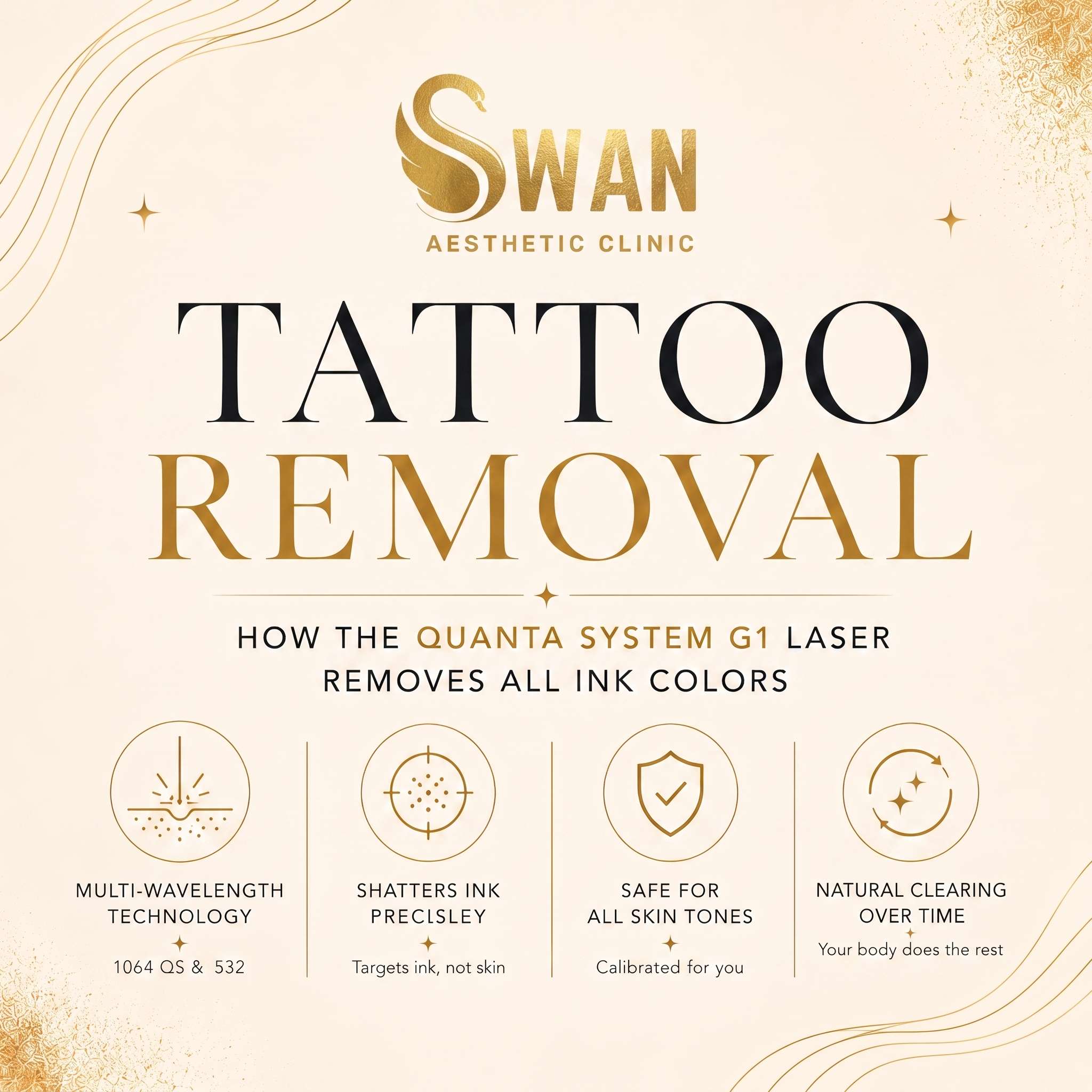
Tattoo Removal Dubai: How the Quanta System G1 Laser removes all Ink Colors
A name that meant something at twenty-three does not always mean the same thing at thirty-four. That


