
ASCE+ HRLV scalp revitalization: Hair exosome therapy in Dubai at Swan Aesthetic Clinic
Most conversations about hair loss start too late. By the time thinning is noticeable — in photographs, in the mirror, in the way light catches the crown — a significant amount of follicular activity has already been compromised. This is partly why so many treatments disappoint: they are applied to a problem that has been quietly progressing for years, often in a scalp environment that has never been properly addressed.
Hair restoration has evolved considerably, but for a long time the options remained essentially the same: medications requiring indefinite use, PRP with variable response rates, or transplant surgery. Each has its place. None of them works at the cellular signalling level where much of hair loss originates.
Exosome therapy is the most significant development in hair restoration in recent years, and ASCE+ HRLV — developed by ExoCoBio, a South Korean biotechnology company specialising in regenerative aesthetics — is among the most rigorously formulated and clinically supported exosome products currently available. Swan Aesthetic Clinic offers it in Dubai as part of a comprehensive approach to scalp health and hair revitalization.
What ASCE+ HRLV is
ASCE+ HRLV (Hair Revitalization) is a professional scalp treatment built on exosome technology. Exosomes are microscopic extracellular vesicles — particles released naturally by cells to carry proteins, growth factors, peptides, and signalling molecules to other cells. They are not cells themselves. Think of them as highly targeted messaging systems: they tell surrounding tissue what to do, which processes to activate, which to slow down.
In the context of scalp health, this matters because hair loss is rarely just a follicle problem. The scalp environment — its inflammatory state, its blood supply, its cellular communication — determines whether follicles remain active, enter dormancy, or stop functioning entirely. ASCE+ HRLV is designed to intervene at that level.
Each vial contains 20mg of lyophilised powder carrying 10 billion exosomes, purified using ExoCoBio’s proprietary ExoSCRT™ technology. The formula includes over 1,008 types of proteins and growth factors that support the anagen (active growth) phase of the hair cycle, along with 598 types of miRNAs that help modulate scalp inflammation. Biotin and copper tripeptide are also included to further support follicle health.
The formulation was developed specifically to address four concerns: scalp rejuvenation, hair-loss care, hair aging, and scalp condition management. It is not a general wellness product repurposed for hair. It is purpose-built for this application by a manufacturer with deep investment in the regenerative aesthetics field.
How it works
Healthy hair growth is downstream of scalp health. Blood supply, inflammation levels, cellular signalling, and the condition of the tissue surrounding each follicle all determine what the follicle does. When those conditions deteriorate — through chronic stress, hormonal shifts, nutritional gaps, or in Dubai’s case, the cumulative effects of heat exposure, UV damage, and the constant transition between outdoor temperatures and air-conditioned environments — follicles respond by shortening their growth cycles and eventually ceasing to produce terminal hair.
ASCE+ HRLV delivers bioactive signalling molecules that support scalp regeneration, reduce inflammatory activity, improve the follicular environment, and promote the conditions in which healthier hair growth becomes possible. The proposed biological mechanism involves Wnt/β-catenin pathway activation, hair follicle stem cell proliferation, angiogenesis, and melanogenesis.
At Swan, the treatment is administered via microinjection directly into the scalp. This is followed by microneedling, which is not merely complementary — it is clinically significant. Research has shown that combining ASCE with microneedling increases ingredient absorption approximately 5.87 times compared to topical application alone. The two work together: microneedling creates precise channels in the scalp, and the exosome solution is driven into the tissue at depth rather than sitting at the surface.
Depending on individual assessment, electroporation or laser-assisted delivery may also be used. The protocol is determined at the initial consultation based on the pattern and severity of hair loss.
What the clinical evidence shows
The evidence base for ASCE+ HRLV is still developing, but what exists is more substantive than is typical for an emerging treatment.
A clinical presentation at the European Academy of Dermatology and Venereology (EADV) evaluated 29 participants who received microneedling combined with ASCE treatment over six months. Investigators reported improvements across hair length, thickness, follicular activity, and scalp rejuvenation markers. A separate published case report in the Journal of Cosmetic Dermatology documented improvements in hair density and thickness in a client with androgenetic alopecia following multiple ASCE+ HRLV-S sessions delivered via electroporation, with no significant adverse effects.
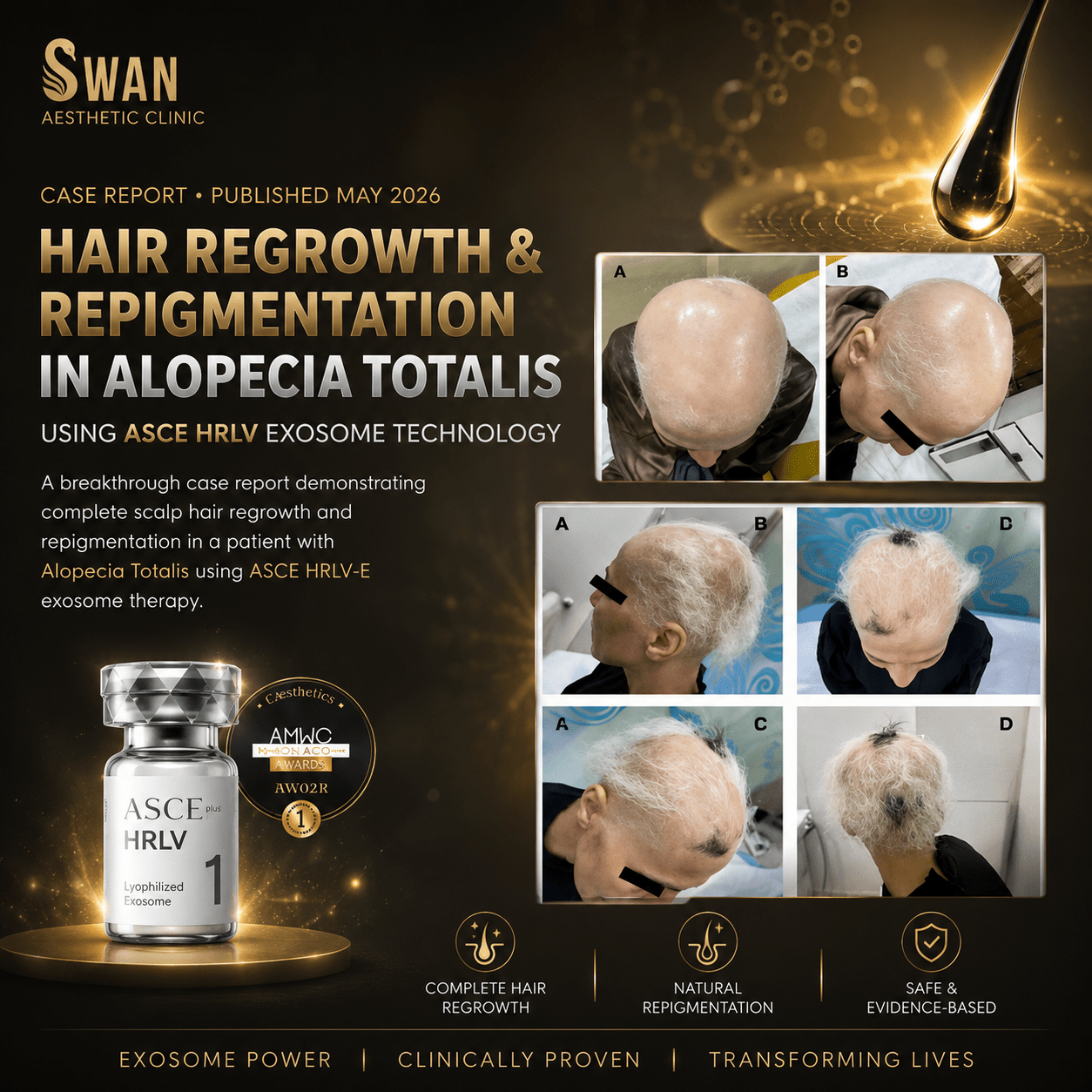
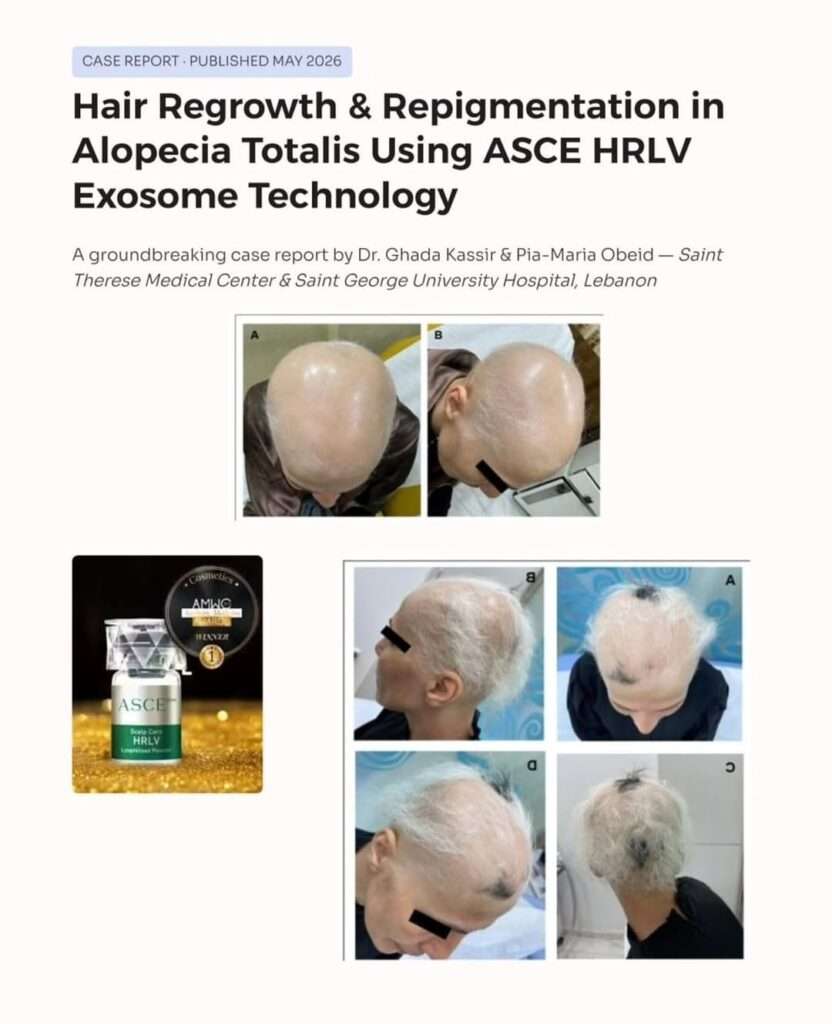
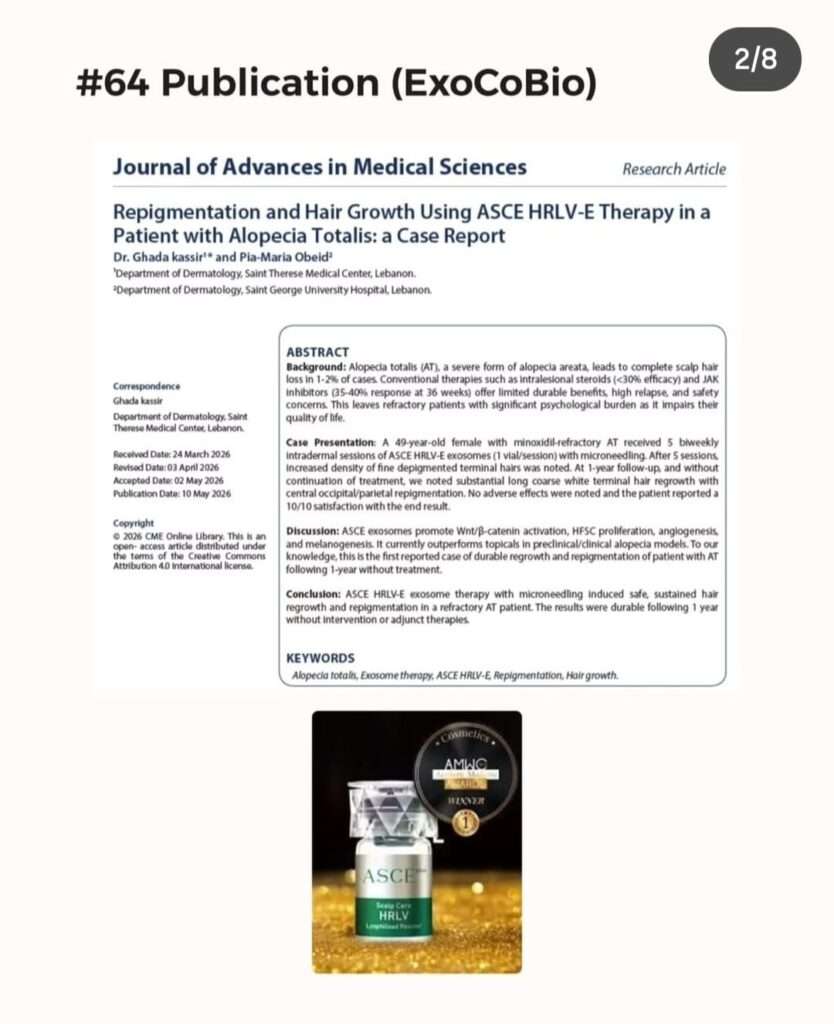
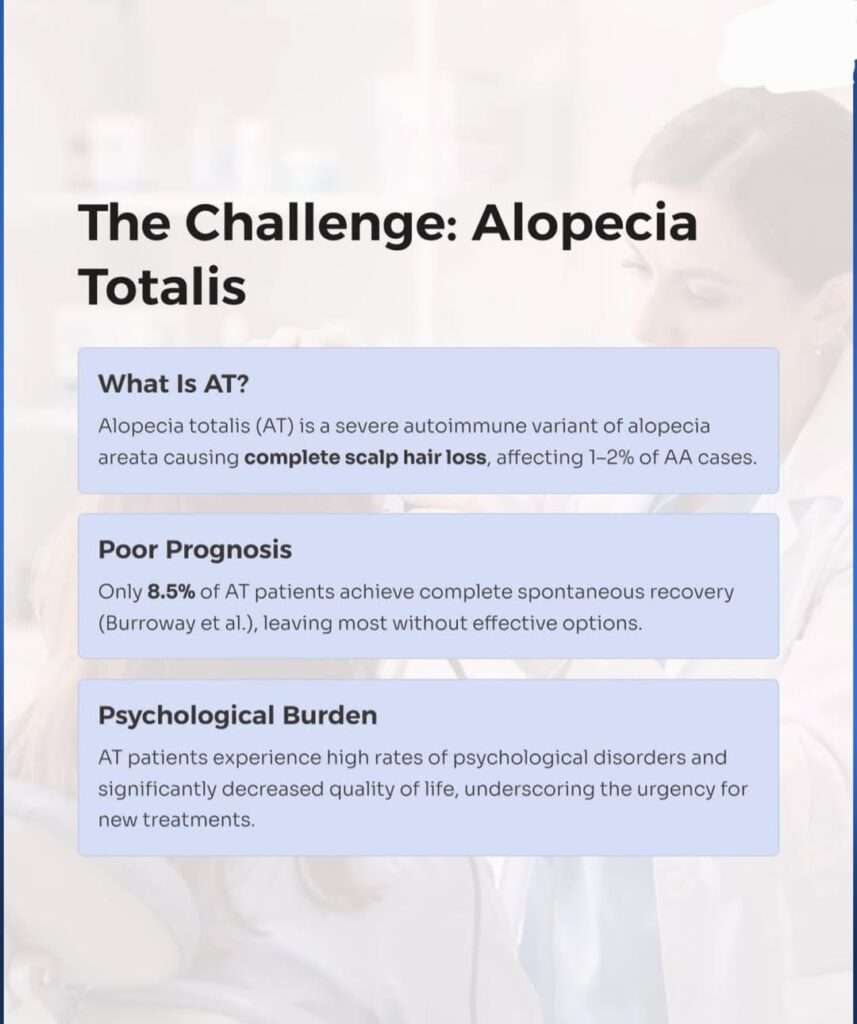
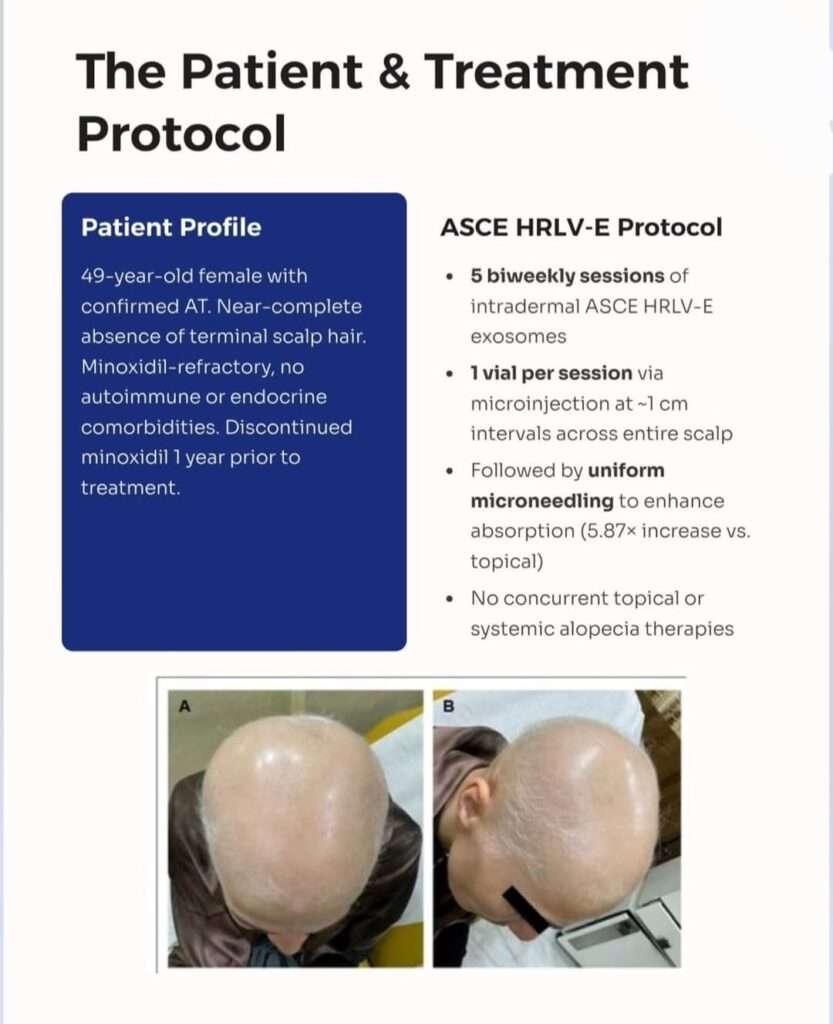
The most compelling clinical data, however, comes from a case report published in May 2026 in the Journal of Advances in Medical Sciences, authored by Dr. Ghada Kassir and Pia-Maria Obeid of Saint Therese Medical Center and Saint George University Hospital in Lebanon. The case involved a 49-year-old woman with confirmed alopecia totalis — a severe autoimmune variant of alopecia areata that causes near-complete scalp hair loss, affecting 1–2% of alopecia areata cases. She was minoxidil-refractory. No other conventional options remained viable.
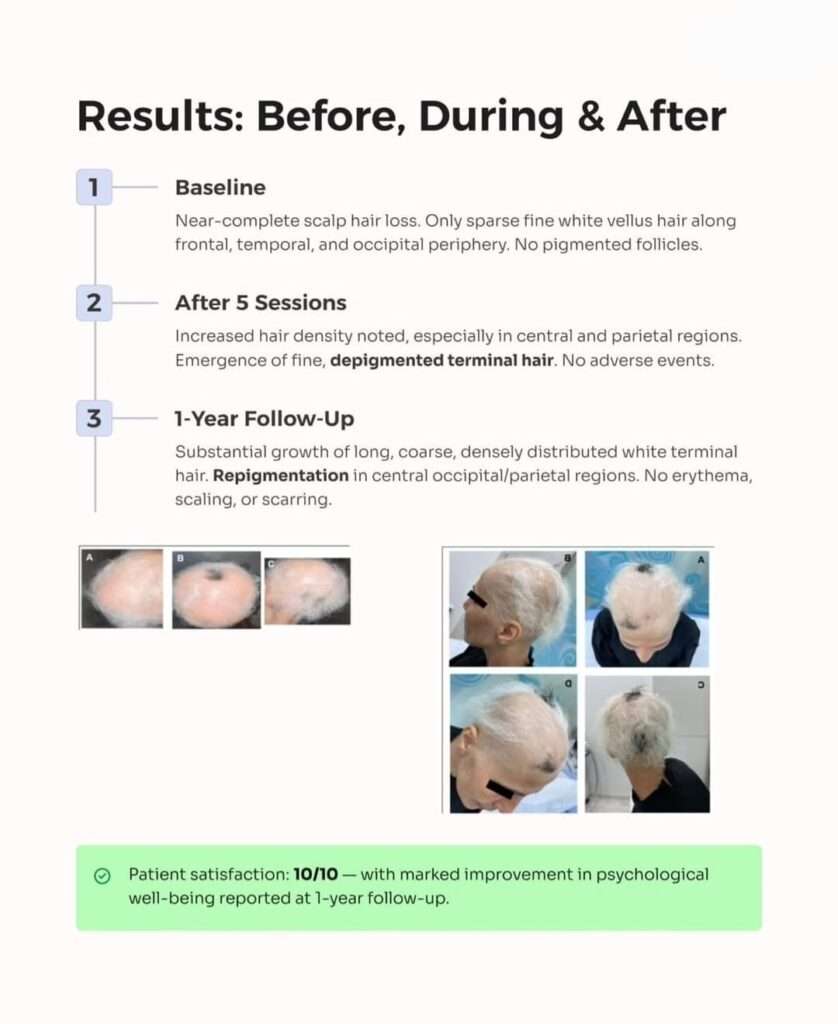
The treatment protocol was five biweekly intradermal sessions of ASCE HRLV-E exosomes — one vial per session, administered via microinjection at approximately one-centimetre intervals across the entire scalp — followed each time by microneedling to enhance penetration. No concurrent topical or systemic alopecia therapies were used.
After five sessions, increased hair density was observed in the central and parietal regions, with fine terminal hair beginning to emerge. At the one-year follow-up — without any continuation of treatment — the client had developed substantial long, densely distributed white terminal hair with repigmentation in the central occipital and parietal regions. No erythema, scaling, or scarring was noted at any stage. Satisfaction was reported as 10 out of 10, with marked improvement in psychological wellbeing documented at the one-year follow-up.
The authors state this is the first reported case of durable regrowth and repigmentation in a client with alopecia totalis following ASCE HRLV-E therapy, maintained for one year without further treatment or adjunct therapies.
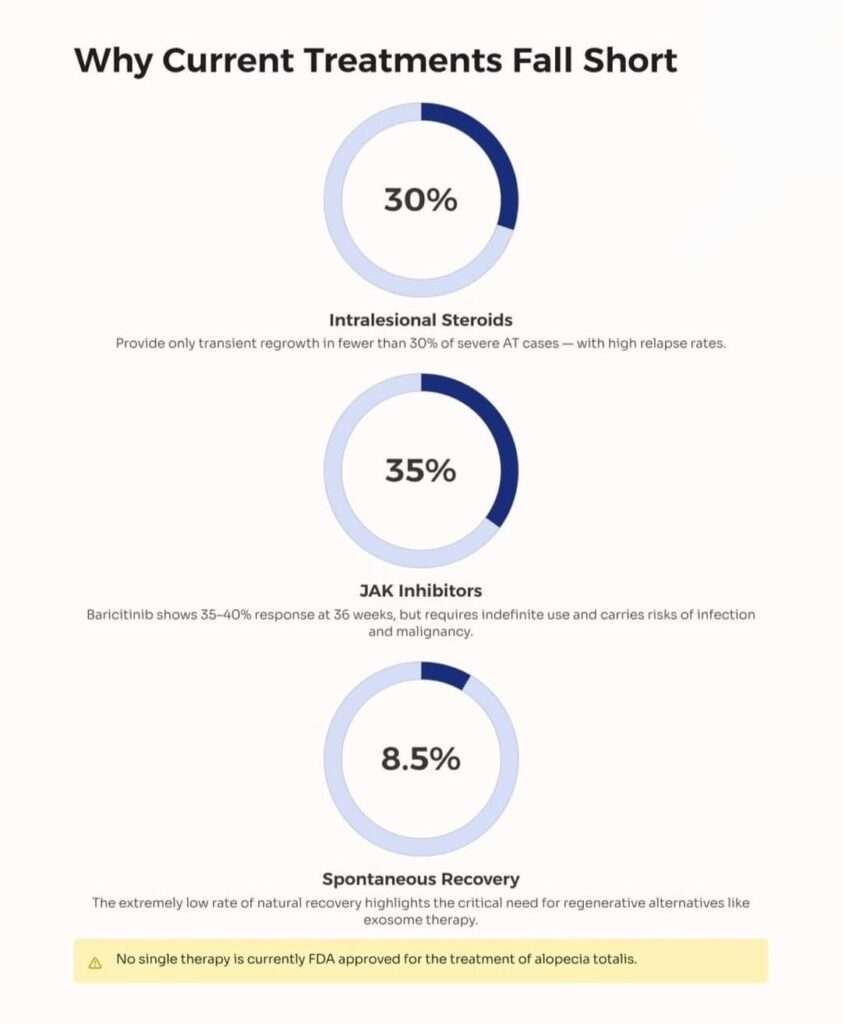
To understand what this means, some context is useful. Intralesional steroids — a standard treatment for severe alopecia areata — produce transient regrowth in fewer than 30% of alopecia totalis cases, with high relapse rates. JAK inhibitors such as baricitinib show a 35–40% response at 36 weeks but require indefinite use and carry risks of infection and malignancy. Spontaneous recovery occurs in approximately 8.5% of cases. No single therapy is currently FDA-approved for alopecia totalis. The ASCE HRLV-E results sit within that landscape. They do not overwrite it, but they are significant.
Who the treatment is suited for
ASCE+ HRLV is not only for severe hair loss. At Swan, it is offered across a wide range of presentations:
- Male and female pattern hair loss (androgenetic alopecia)
- General thinning and age-related hair changes
- Poor scalp condition affecting hair quality
- Early to moderate hair loss, where preserving existing density is the priority
- Scalp preparation before or recovery after a hair transplant procedure
The treatment is also appropriate for anyone who has found conventional approaches insufficient, or who wants to address scalp health proactively before visible thinning progresses. People living and working in Dubai face specific scalp pressures that accelerate this timeline. Chronic UV exposure, summer heat that persists well into the evening hours, and the dehydrating effect of constant air conditioning create a scalp environment under sustained stress. These are not acute problems — they accumulate slowly, and their effect on follicle health tends to be underestimated until the results become visible.
For early-stage hair thinning specifically, the case for intervening sooner rather than later is straightforward: treatments aimed at improving the scalp environment are more effective when there is still active follicle function to support. ASCE+ HRLV can be used as a standalone treatment or alongside Swan’s PRP hair treatment and hair filler options, depending on what the assessment reveals. The full range of hair growth treatments at Swan is designed to be approached as an integrated program, not a menu of isolated procedures.
A consultation is the necessary first step. Hair loss has multiple causes — hormonal, autoimmune, nutritional, genetic, environmental — and no treatment protocol is appropriate without understanding what is driving the loss in the first place.
Sessions, timeline, and what to expect
Most protocols at Swan involve a course of sessions spaced two to four weeks apart. The exact number depends on the individual presentation and the degree of scalp involvement.
Visible changes follow the hair growth cycle, which means they develop gradually. The first improvements are often in scalp quality and hair texture — the hair feels stronger, the scalp less inflamed — before density changes become apparent. This typically becomes visible over several months following the treatment course. The one-year follow-up data from the published case report reflects the sustained nature of these changes: results that hold, and in some cases continue to improve, well after the final session.
Aftercare
There is no significant downtime. Mild redness or scalp sensitivity following treatment is common and typically resolves within a day or two — manageable for anyone maintaining a full schedule in the city.
In the days following each session, the scalp benefits from protection against UV exposure. Sunscreen applied to exposed areas, gentle washing, and reduced heat tool use are the practical steps. Harsh shampoos and chemical scalp treatments should be avoided in the immediate post-treatment period. The team at Swan will provide specific aftercare guidance at each appointment.
Safety
Current published data supports ASCE+ HRLV as well-tolerated when administered by trained professionals. The case report referenced above noted no adverse events across five sessions and a one-year follow-up period. As with any injectable aesthetic treatment, temporary redness, mild sensitivity, or scalp irritation may occur, but serious adverse effects have not been reported in the published literature to date.
Clients should discuss their full medical history, any medications, and their expectations with the team at Swan before beginning treatment. Some underlying conditions may influence hair loss patterns and need to be addressed alongside — or prior to — the exosome protocol.
A note on expectations
The clinical evidence for ASCE+ HRLV is encouraging, and the published data includes outcomes that are genuinely remarkable by the standards of hair loss treatment. But a single case report — however well-documented — is not clinical proof for all hair loss presentations, and the field as a whole continues to build its evidence base. Larger controlled studies are still needed.
What can be said with confidence: ASCE+ HRLV is a well-characterised formulation from a manufacturer with a serious investment in the science, with a growing clinical record and a safety profile that published data supports. For clients who have reached the limits of conventional treatment, or who want to address scalp health with something more targeted than a supplement, it represents a substantive option.
To find out whether ASCE+ HRLV is right for your hair loss pattern, contact Swan Aesthetic Clinic to arrange a consultation. The team will assess your scalp, discuss your history, and build a treatment plan around what your hair actually needs — not a generic protocol, but one matched to you.
Read Recent Articles

Hair Filler
Are you tired of seeing more scalp than hair when you look in the mirror? Hair thinning and loss can

Hair Exosome Treatment
Advanced Regeneration for Stronger, Fuller Hair At Swan Aesthetic Clinic, we believe in addressing h
Why your hair is thinning in Dubai – and what Haircare by Revitacare actually does about it
Hair loss in Dubai is not just a cosmetic concern. It is a clinical one, and it is far more common t


