
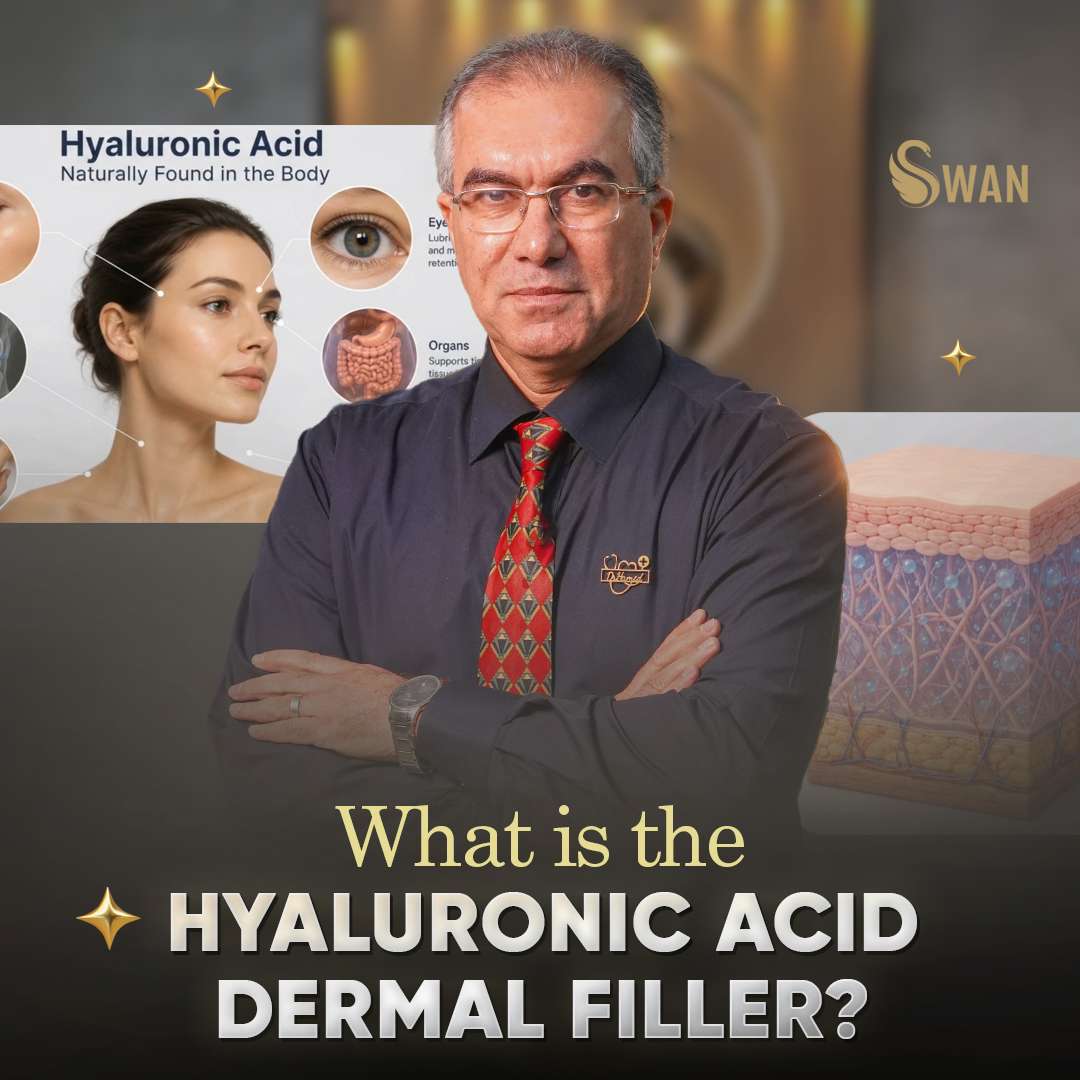
What Hyaluronic Acid Dermal Filler actually is, and why the body’s own version isn’t enough after a certain point
There’s a molecule already inside you that can hold a thousand times its own weight in water. You’ve had it your whole life.
It’s in the fluid cushioning your joints. In the surface of your eyes. In the deeper connective tissue running through your organs, and in the skin itself.
So if it’s already there, why would anyone need more of it injected? That question comes up in nearly every filler consultation, and it’s a fair one, especially living somewhere like Dubai where skin already works harder than most climates demand.
The answer sits in what the molecule actually does. Hyaluronic acid works almost like a sponge inside the tissue, pulling in and holding water. That’s what keeps skin plump, joints cushioned, and eyes properly lubricated.
For most of early adulthood, there’s plenty of it circulating to do the job. In Dubai’s dry, air-conditioned indoor air paired with intense outdoor heat, that natural reserve gets tested more than it would in a milder climate.
Around age 25, production starts to slow. Not stop, but slow, gradually enough that most people don’t notice at first.
A systematic review published in the Journal of Cosmetic Dermatology in 2025 describes this decline plainly. Aging reduces the skin’s own hyaluronic acid production, and that reduction is a direct contributor to wrinkles and sagging over time.
Less hyaluronic acid means less water retention. Less water retention means the skin loses the plumpness that kept it looking fuller and smoother in your twenties. For residents of Dubai, this decline tends to show up sooner than expected, layered on top of the dehydration the climate already causes.
Why an injectable version fills the gap
This is where hyaluronic acid dermal filler comes in, and it’s worth being precise about what it is versus what it isn’t.
A dermal filler is a cross-linked gel form of hyaluronic acid. It’s formulated to hold its structure once placed under the skin, rather than dispersing the way a topical serum would.
It’s a different category from mesotherapy-style skin boosters, which are designed more for hydration and skin quality through a series of micro-injections. A dermal filler is built to add volume and structure in a specific area, whether that’s replacing lost fullness in the cheeks, softening a fold, or refining the shape of the jawline or lips.
Most clients coming through Swan’s Dubai clinic for a first filler consultation are surprised by how much of this decision comes down to structure rather than simply adding more product.
Once placed, the filler behaves the way natural hyaluronic acid does, pulling in and holding water within the tissue. That’s part of why results look like the skin’s own volume rather than an obviously added layer, when the right product and amount are used.
A broader review of hyaluronic acid’s effects at the cellular level notes something else worth knowing. Beyond simple hydration, hyaluronic acid interacts directly with skin cells in ways that support collagen production and tissue repair, not just water retention on its own. That’s part of why the benefits of an HA filler tend to extend slightly beyond the treated area over time.
What clients are actually asking for
Most people booking an HA filler consultation in Dubai aren’t asking for a completely different face. They’re asking to address a handful of specific, related concerns, and it helps to see them laid out together rather than as one vague goal.
- Restoring lost volume in areas where the face has started to look hollow or flat, particularly the cheeks and under-eye region.
- Improving overall proportion, where one feature has become disproportionate to the rest of the face as volume shifts with age.
- Supporting hydration and skin firmness in the treated area for a longer stretch of time than a topical product could manage on its own.
- Bringing back a visible radiance that comes from properly hydrated, well-supported skin rather than from makeup or lighting.
None of these goals require dramatic change to achieve. Most clients want their own face to look rested and proportionate again, and that distinction shapes how much filler actually gets used in a session.
Why Dubai’s pace and climate make this more relevant
Living in Dubai adds its own pressure to this natural decline. Heat and humidity push the skin to lose moisture faster than it would in a cooler climate.
The constant shift between air-conditioned interiors and outdoor heat compounds that dehydration rather than giving the skin a chance to recover. Add a social calendar that rarely slows down, with weddings, launches, and events stacked through most of the year, and it’s easy to see why so many clients in Dubai want their skin looking its best more consistently than an occasional facial can manage.
Frequent travel plays into this too. Long-haul flights and shifting climates are hard on hydration levels generally, and for people moving in and out of Dubai regularly for work or personal travel, that adds another layer of stress the skin has to recover from between trips.
What to actually expect
Results from an HA filler are visible almost immediately, though some initial swelling typically settles within a few days to reveal the final shape.
How long the effect lasts depends on the area treated, the specific product used, and how quickly an individual’s body naturally breaks down the gel. Most facial filler treatments last somewhere in the range of six months to over a year before a touch-up is worth considering.
Clients splitting their time between Dubai and cooler climates sometimes notice their filler settling a little differently depending on the season, simply because heat and hydration levels shift the way the gel integrates with surrounding tissue.
One thing worth understanding upfront: hyaluronic acid filler is reversible in a way many other treatments aren’t, since an enzyme exists that can dissolve it if the result ever needs adjusting. That reversibility is one reason it remains one of the more commonly requested injectable treatments among clients who want a natural-looking result with a safety net built in.
Choosing where filler goes, and how much of it, comes down entirely to individual facial structure and what’s actually changed over time. That’s not something to guess at from a photo of someone else’s results.
A proper consultation looks at the whole face, not just the area someone walks in wanting to treat, since volume loss in one region often affects how another region looks by comparison.
Clients exploring their first hyaluronic acid filler treatment in Dubai, or looking to refine results from a previous session, can review Swan’s approach to natural facial contouring or its dedicated guide to lip filler treatment before booking.
Anyone unsure where to start can reach out directly and have a specialist assess what their own skin actually needs.
Read Recent Articles
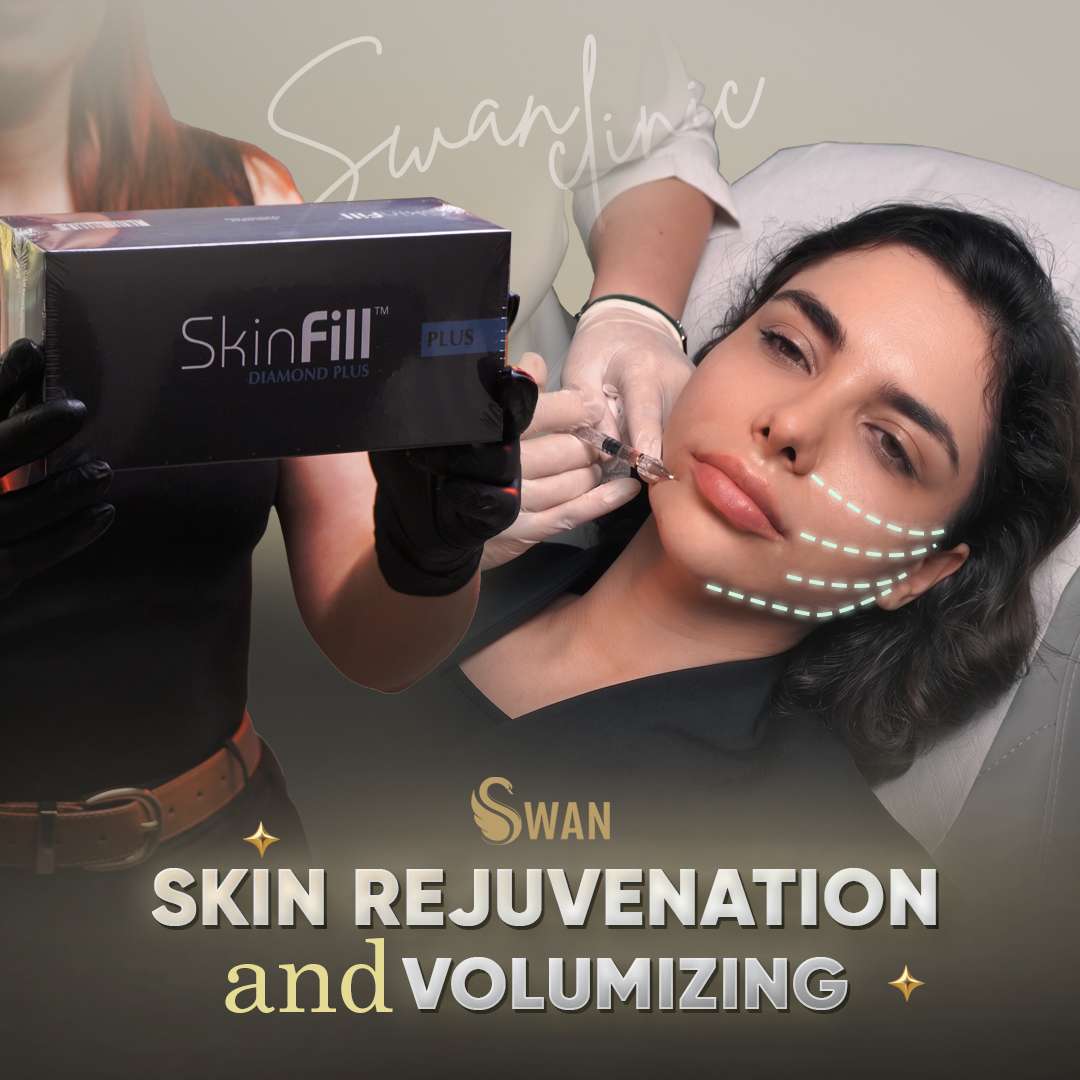
Hyaluronic acid filler for skin volume and hydration in Dubai: SkinFill Diamond Plus at Swan Aesthetic Clinic
There is a specific kind of volume loss that doesn’t announce itself. No single morning where

Why Radiesse Is Becoming a Go-To Treatment in Dubai
There is a particular kind of tiredness that appears not in how you feel, but in how your face looks

Face Filler: Natural Facial Contouring Without Surgery
Face filler treatments have become one of the most popular non-surgical aesthetic solutions for indi


