
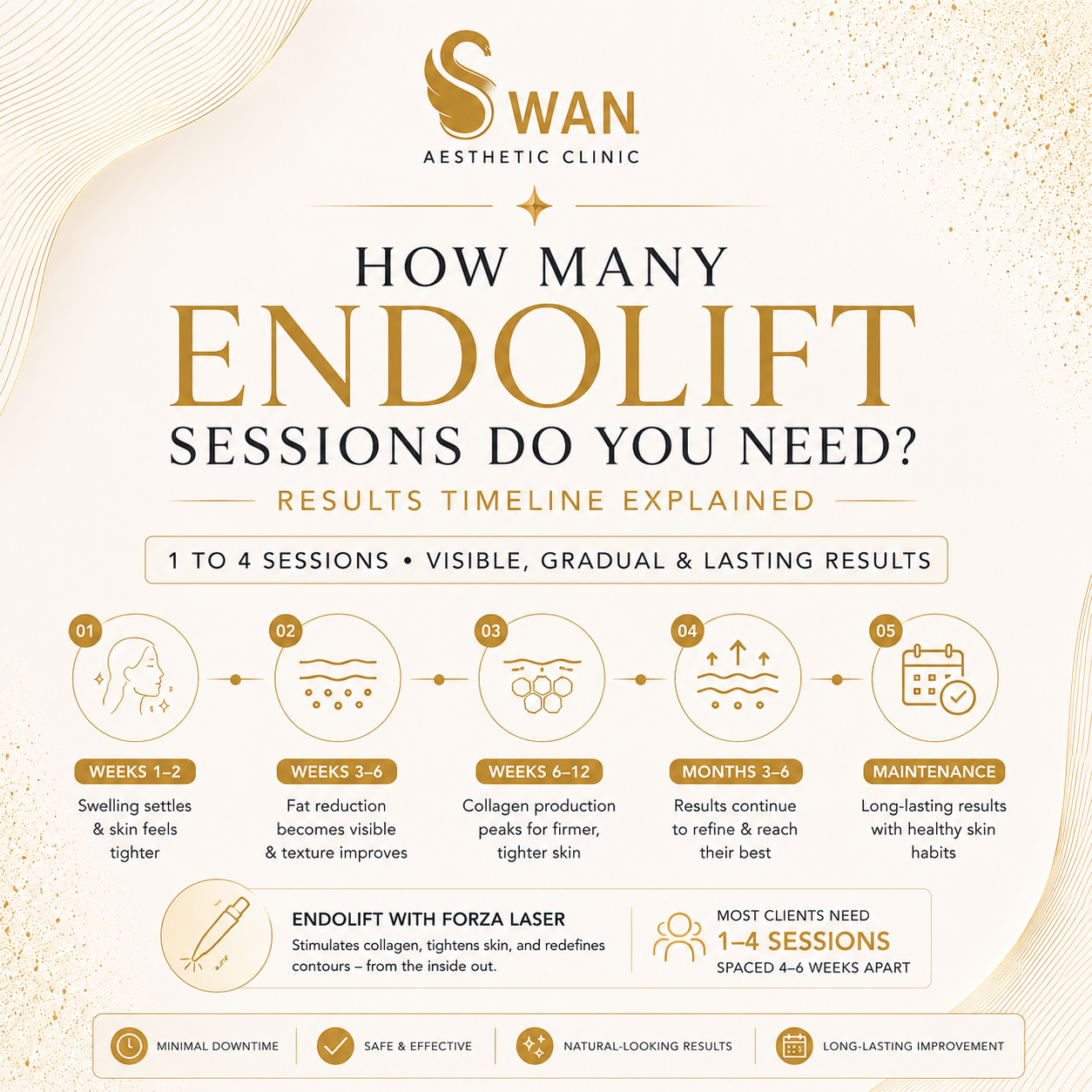
How many Endolift sessions do you need? Results timeline explained
Most clients need between one and four Endolift sessions to see the result they were expecting. The number depends almost entirely on how much skin laxity is present and where it sits on the face or body, not on a fixed formula that applies to everyone.
For mild to moderate laxity around the jawline or under the chin, a single session is often enough. For more pronounced sagging, particularly on the neck, jowls, or larger body areas like the abdomen, most clinics recommend a course of two to four sessions spaced four to six weeks apart.
That’s the short answer. The longer one is about timing, because Endolift doesn’t work the way a filler does.
Why results build slowly instead of appearing immediately
Endolift uses a thin laser fiber inserted beneath the skin to heat the deeper tissue layer. That heat does two things: it reduces small pockets of fat, and it triggers the skin’s own collagen production. Neither of those processes finishes on the day of treatment.
Collagen remodeling is biological, not mechanical. Skin doesn’t tighten the moment the laser is switched off. It tightens as new collagen fibers form and mature over the following weeks, which is why the visible result several months after a session often looks better than the result at the two-week mark.
A 2025 laser study tracked skin elasticity after three sessions of a comparable non-ablative laser, at intervals of 21, 42, 70, and 130 days. Elasticity kept improving at every checkpoint, and the tightening effect measured 90 days after treatment ended was still greater than it had been at 28 days. That gap between what you see early and what you see later is normal, and it’s worth knowing before booking so the first follow-up appointment doesn’t feel disappointing by comparison.
A rough timeline, session by session
Here’s what that progression tends to look like in practice, based on how clients typically respond:
- Weeks 1 to 2: mild swelling and tightness settle, and the treated area often looks slightly firmer even at this early stage, mostly from the initial tissue response rather than new collagen.
- Weeks 3 to 6: this is when fat reduction becomes more visible in body areas, and skin texture starts to feel noticeably smoother.
- Weeks 6 to 12: collagen production is most active during this window, and this is usually when clients see the clearest tightening.
- Months 3 to 6: results continue to refine gradually, particularly after a second or third session, with the skin’s texture and firmness reaching their most stable state.
Clients doing a multi-session course usually have their next appointment scheduled once the previous session’s swelling has fully resolved, typically around the four-week mark, so the skin is in the right state to respond to the next round of stimulation.
What actually determines how many sessions someone needs
Age matters, but not as much as most people assume. Skin quality, sun exposure history, and how much collagen the skin has already lost are usually bigger factors than age alone.
This is where living in Dubai becomes relevant to the conversation. Years of intense UV exposure, combined with the constant shift between air-conditioned interiors and outdoor heat, tends to accelerate collagen breakdown in ways that aren’t always visible until skin laxity sets in earlier than clients expect. Someone in their late thirties who has spent a decade in this climate may need a different session plan than someone the same age elsewhere.
Treatment area matters too. Facial areas like the jawline and under-chin region tend to respond faster because the skin is thinner and the fiber path is shorter. Body areas such as the abdomen or inner arms carry more tissue and usually need a longer course to reach a comparable result. Clients exploring both can compare face and body Endolift side by side before deciding where to start.
Is it possible to need just one session and still get a strong result? Yes, particularly for early-stage laxity where the goal is prevention rather than correction. The earlier Endolift is used, the less collagen deficit there is to correct, which usually means fewer sessions overall.
Aftercare that actually affects the timeline
What happens between sessions has more influence on the final result than most clients expect. Sun protection is non-negotiable, since UV exposure directly interferes with the collagen synthesis the treatment is trying to stimulate.
Hydration matters just as much, especially given how quickly Dubai’s air conditioning pulls moisture from skin indoors. Clients are usually advised to keep the treated area well moisturized and to avoid saunas, steam rooms, or intense heat exposure for a week or two after each session, since excess heat can interfere with the healing tissue.
Smoking and poor sleep both slow collagen production measurably, which can stretch out the timeline even when the treatment itself has gone well. None of these factors are dramatic on their own, but together they’re often the difference between a client who sees results on schedule and one who needs an extra session to catch up.
Building a realistic plan before starting
The honest answer to “how many sessions will I need” only comes from an in-person assessment, since laxity, skin thickness, and treatment goals vary too much between individuals for a general estimate to be reliable. Clients exploring non-surgical skin tightening with Endolift usually leave a consultation with a specific number of sessions mapped to their own anatomy rather than a generic recommendation.
For clients comparing Endolift against other tightening approaches like Sculptra or Radiesse before committing to a plan, it helps to look at the full range of lifting treatment options rather than choosing based on one treatment alone. Swan Aesthetic Clinic in Dubai builds each session plan around the client’s own skin history, climate exposure, and goals, which is usually what separates a plan that delivers steady, visible progress from one that leaves a client guessing between appointments. Anyone ready to map out their own timeline can reach the clinic through the contact page to arrange an assessment.
Read Recent Articles
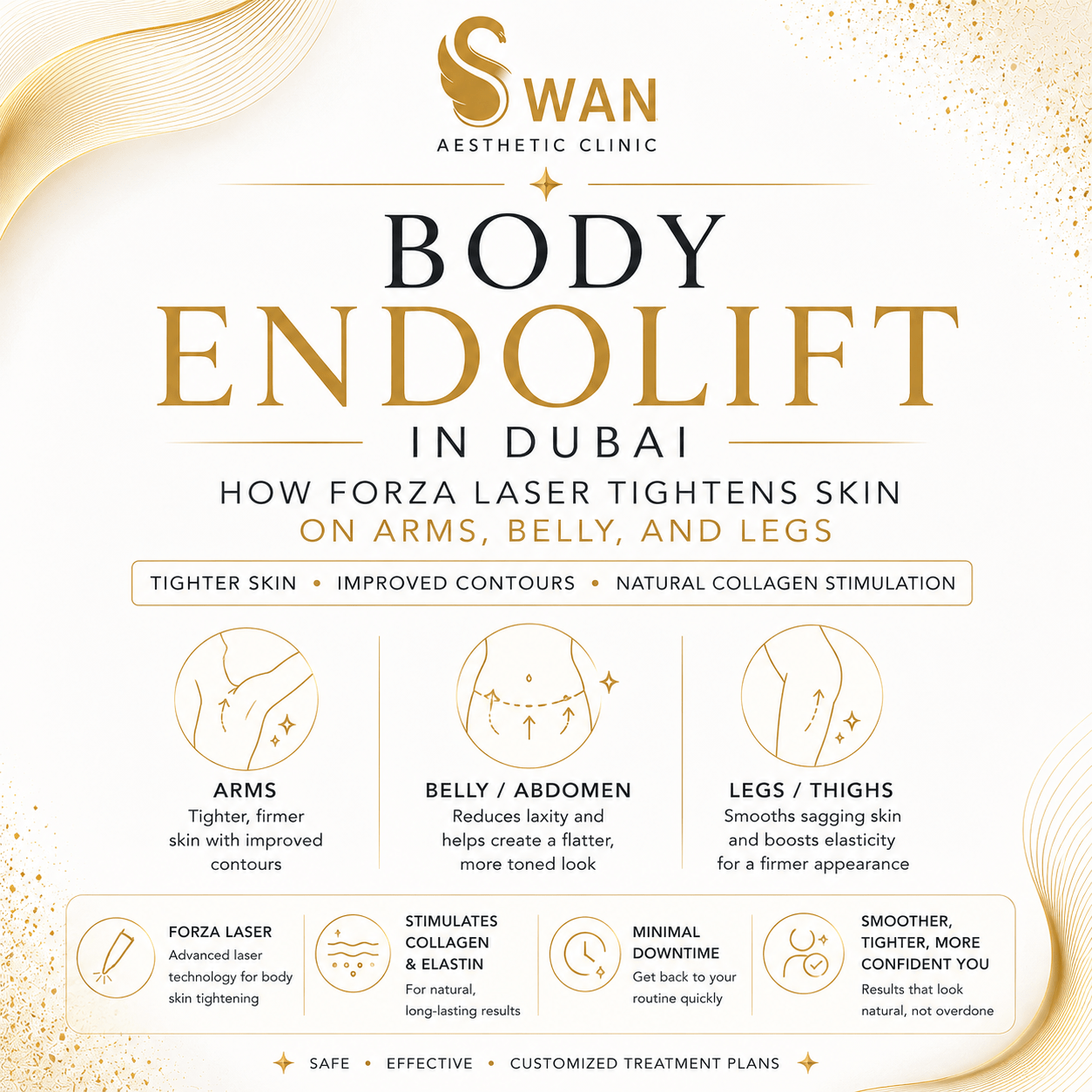
Body Endolift in Dubai: How Forza laser tightens skin on arms, belly, and legs
Loose skin on the upper arms or lower belly rarely responds to diet or exercise. Fat cells shrink wi
Non-surgical Skin Tightening With Endolift In Dubai
A Modern Approach to Skin Tightening in Dubai In Dubai’s dynamic environment, many individuals see
Skin Lifting and Fat Melting with Endolift and Forza in Dubai
Modern aesthetic medicine offers advanced non-surgical options for patients who want visible facial


