
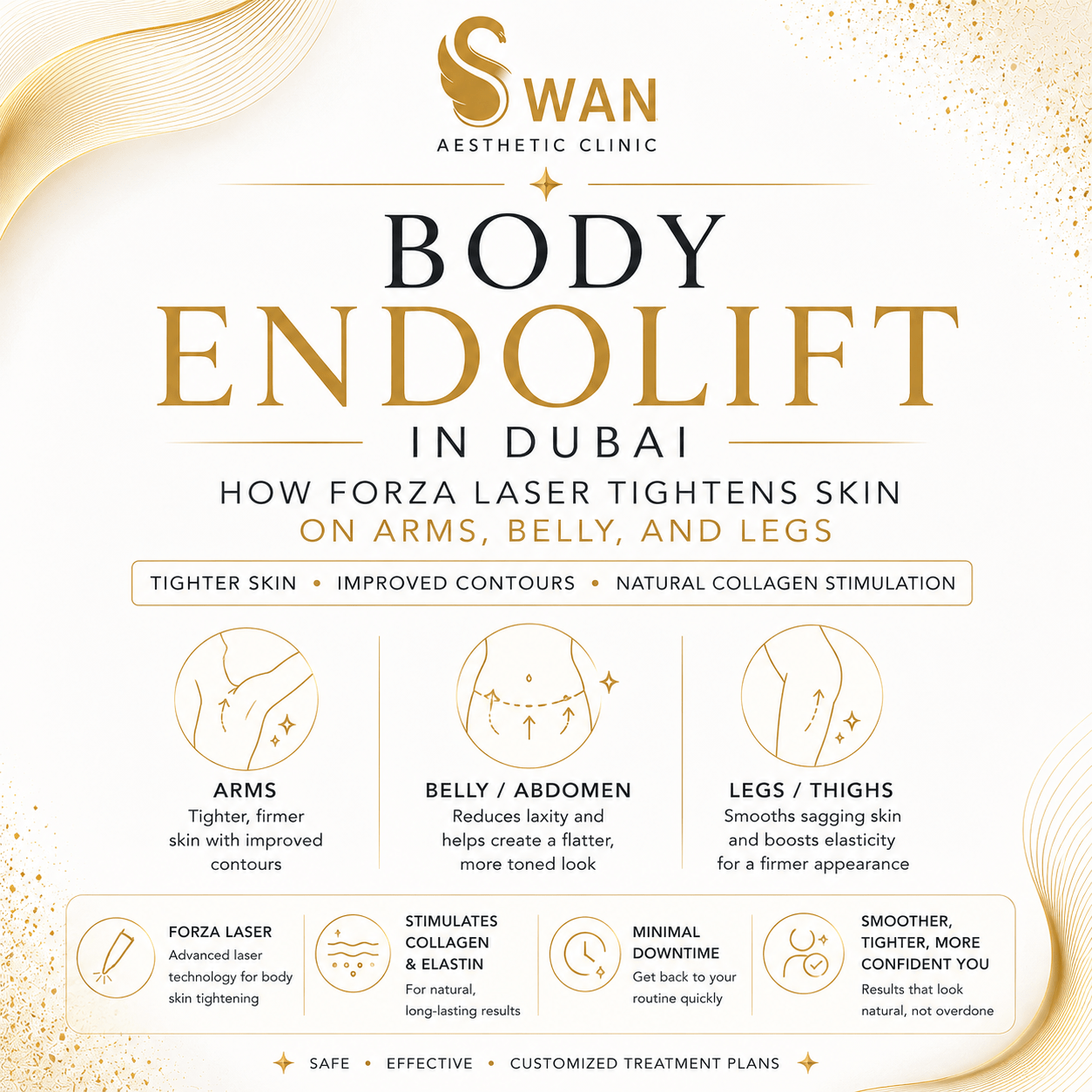
Body Endolift in Dubai: How Forza laser tightens skin on arms, belly, and legs
Loose skin on the upper arms or lower belly rarely responds to diet or exercise. Fat cells shrink with weight loss. The skin covering them doesn’t always follow.
That gap is what body Endolift in Dubai is built to close. It’s a treatment for skin that has lost its spring, not a weight loss treatment.
Body Endolift uses the Forza laser system, the same internal fiber optic technology many Swan Aesthetic Clinic Dubai clients already know from its facial applications. On the body, it scales up to treat arms, abdomen, flanks, and legs, the areas where skin laxity tends to concentrate after weight changes, pregnancy, or age.
How it works, without the technical fog
A fiber roughly the width of a hair is inserted beneath the skin through a tiny entry point, under local anesthesia. The laser energy goes straight into the subdermal layer.
Two things happen there. Small pockets of localized fat begin to reduce. And the surrounding tissue responds to the heat by producing new collagen and elastin, which is what gradually tightens the skin above it over the following weeks.
This is different from surface devices like radiofrequency or ultrasound, which heat through several layers of skin before reaching the target tissue. Endolift works from the inside out. A 2024 dermatology study followed 234 clients receiving a comparable internal laser approach and found the highest satisfaction when it was paired with additional collagen-stimulating support, not used alone.
Clients weighing body Endolift against other body devices often look at Swan’s broader Forza laser treatments first, since the same technology is used across several applications depending on the area.
Who it actually suits
Body Endolift is not for weight loss. It suits people already close to their target weight who are left with skin that didn’t retract on its own, which is common after significant fat loss or pregnancy. It also suits small, stubborn pockets on the arms or inner thighs that haven’t shifted with exercise.
It isn’t right for someone carrying substantial excess weight, or for anyone expecting the dramatic change of surgical body contouring. Most clients see gradual tightening rather than an instant one, building over eight to twelve weeks as new collagen forms.
Does it hurt? Local anesthesia numbs the area first, so most clients describe pressure or warmth during the procedure rather than pain. Some tenderness and swelling afterward is normal.
What a session in Dubai involves
A typical session runs 45 minutes to just over an hour. The area is cleaned and numbed, the fiber passed beneath the skin in a controlled pattern. Most clients return to normal activity the same day, though the area may look mildly bruised for a few days.
Recovery logistics matter more here than in milder climates. Heat and humidity outdoors, combined with air conditioning drying the skin indoors, can slow healing if aftercare isn’t managed properly. Clients are usually advised to avoid direct sun on the treated area, keep it hydrated, and hold off on intense workouts for a short window.
A few practical points worth keeping in mind:
- Most clients need one to three sessions, spaced four to six weeks apart, depending on the area and the amount of laxity present.
- Results keep developing for up to three months after the final session, since collagen remodeling is gradual, not immediate.
- Areas with more noticeable laxity, like the lower abdomen after pregnancy, generally respond better to a course of sessions than a single one.
Why this comes up so often in Dubai consultations
Between frequent travel, a packed social calendar, and a culture that leans toward form-fitting clothing and swimwear for most of the year, skin laxity on the arms or midsection tends to be more visible here than in climates with longer stretches of covered clothing. Add the collagen breakdown that comes with prolonged sun exposure, and it’s clear why non-surgical tightening comes up so often in consultation.
There’s a seasonal logic to timing it too. Recovery is minimal, but any redness is easier to manage during quieter months, before the calendar picks up again in autumn.
How it compares to the alternatives
Clients often ask how this compares to liposuction or to RF body treatments. Surgery removes fat directly and can produce more dramatic change in one procedure, but it comes with real downtime and the need for general anesthesia in most cases. RF devices work entirely from the surface, gentler but slower, usually needing more sessions to reach a comparable result.
Body Endolift sits between the two. More targeted than external RF, without the downtime of surgery. Clients treating both face and body concerns over the same course often read about Endolift and Forza together, since the mechanism is shared across both.
A plan built around your own skin
Endolift depends heavily on how much laxity, fat, and skin quality a given area has, so an in-person assessment is the only reliable way to know how many sessions a specific case needs. Clients considering the body Endolift treatment for the belly or flanks are usually shown exactly where the fiber will be placed for their anatomy. Anyone still deciding between Endolift and a filler-based lift can compare both directly through Swan’s lifting treatment options.
Skin on the body is slower to treat than skin on the face, simply because the areas are larger and thicker. A consultation that maps out a realistic session plan is worth far more than guessing from a before-and-after photo online. Swan Aesthetic Clinic in Dubai schedules these individually, and the team can be reached directly through the clinic’s contact page.
Read Recent Articles
Face Endolift with Forza Laser: Non-Surgical Skin Tightening and Facial Contouring
Understanding Skin Laxity and Facial Aging As we age, the skin gradually loses collagen and elastin,
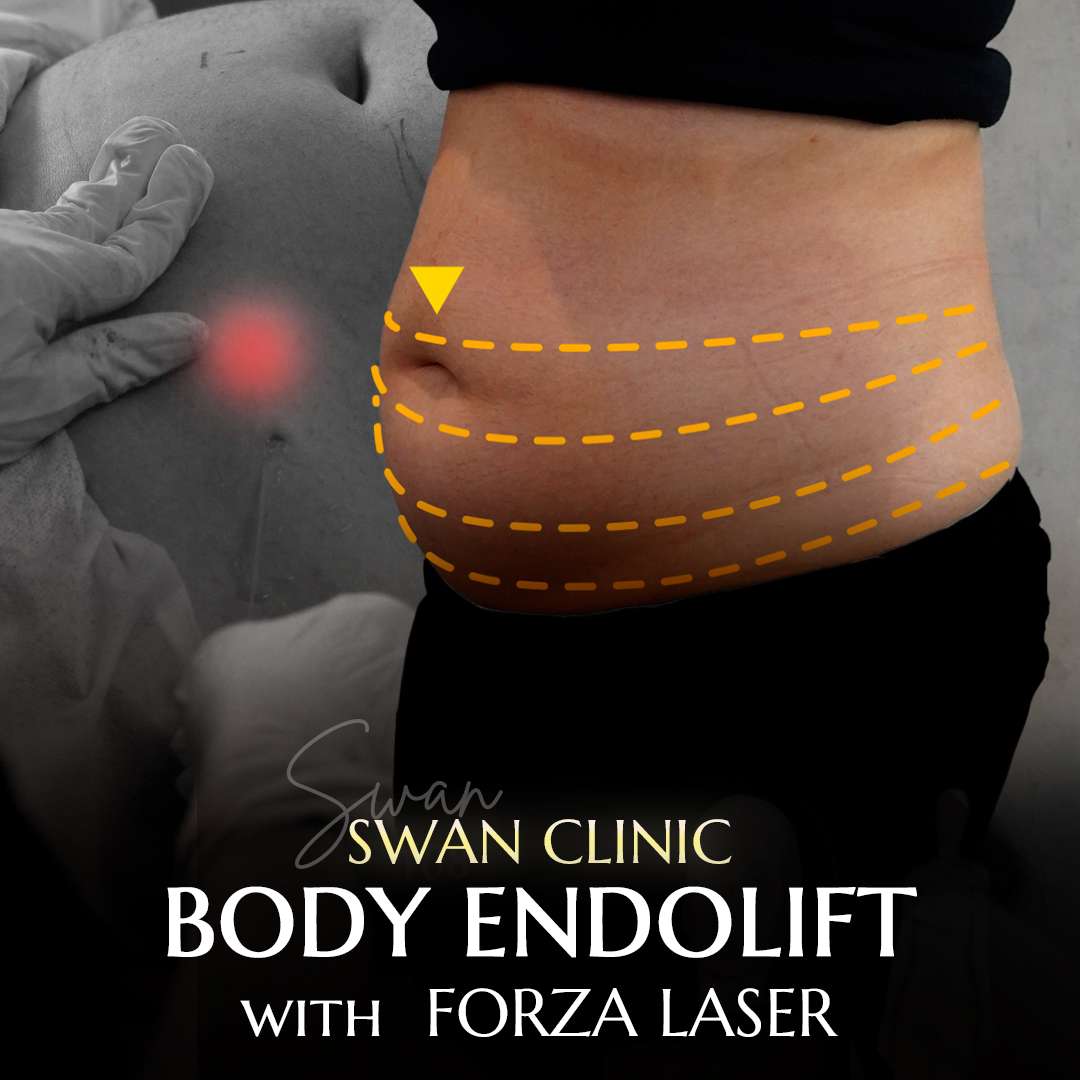
Body Endolift for Belly & Flanks With Forza Laser in Dubai – A Modern, Painless Fat-Reduction Technique
Did you know? According to recent global aesthetic statistics, more than 60% of patients searching f
Face Endolift vs Thread Lift – Which is better for skin tightening in Dubai?
Two treatments come up more than any others when people in Dubai start researching non-surgical alte


