
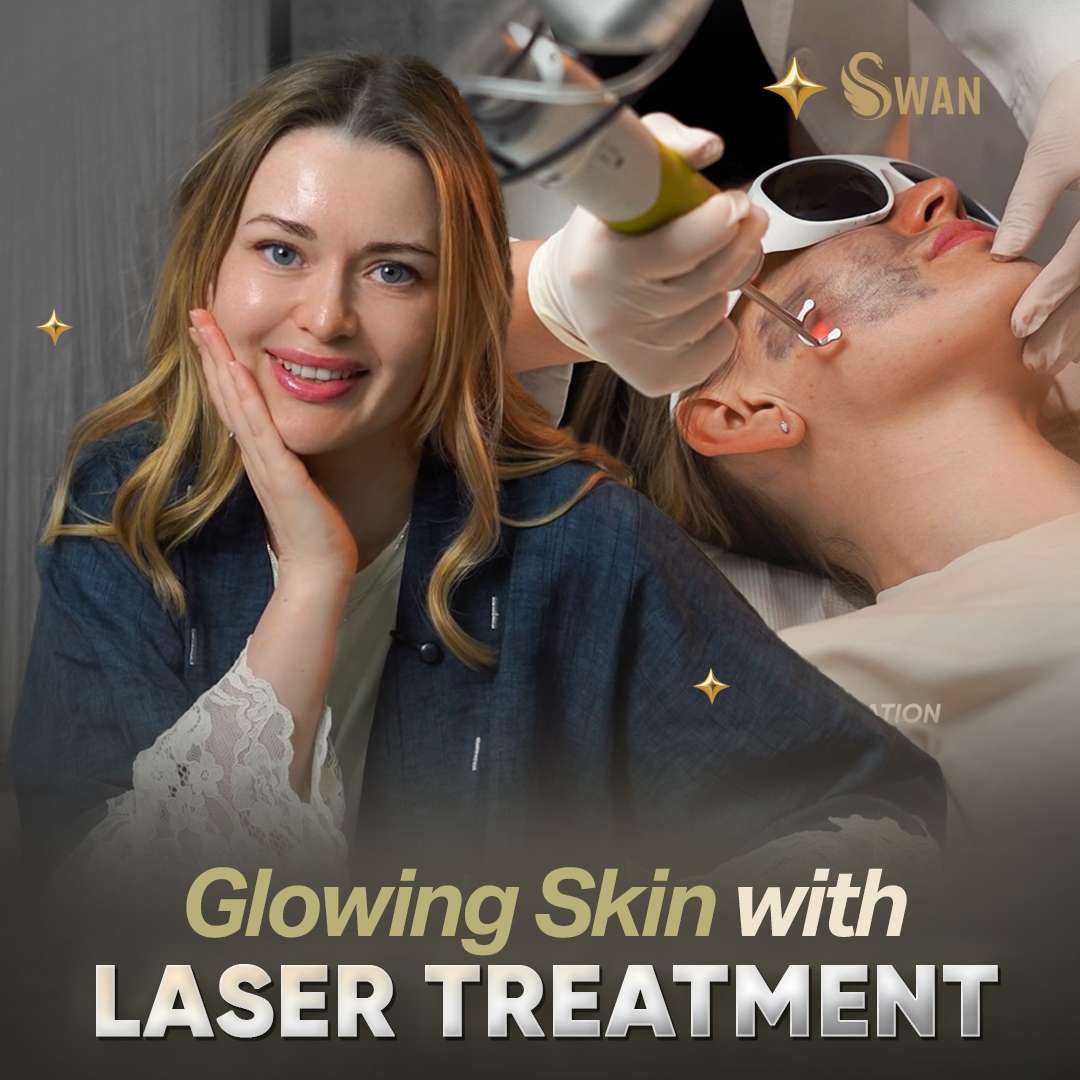
Laser Skin Rejuvenation in Dubai – What One Carbon Peel Session at Swan actually feels like
The carbon goes on like wet charcoal and dries to a matte gray film across the cheeks, nose, and chin. Photos of this stage make the treatment look far more dramatic than it is. Swan’s laser skin rejuvenation with a carbon peel is one of the gentlest laser treatments the clinic offers, and many people book their first session on a friend’s recommendation, curious but unsure what to expect.
Their questions come down to three things. Does it hurt? What will my skin look like when I walk out? How long before I see a difference? This post answers all three by walking through a single session at Swan, from arrival to the week after. For the full clinical background, Swan’s page on the laser facial treatment explains how the treatment works.
[instagram_reel]
Before you arrive
Preparation is simple, though a few things change how comfortable the session is and how well the skin responds.
- Pause retinoids and exfoliating acids for about five days before the appointment, since both thin the surface and make the skin more reactive to heat.
- Avoid deliberate tanning in the week before, including long beach afternoons at JBR or a pool day that stretches into the afternoon sun.
- Arrive with clean skin if you can, or allow a few extra minutes for makeup removal at the clinic.
- Mention any history of cold sores, melasma, or recent treatments such as peels or injectables, because they can change the plan.
None of this is complicated. It simply means the laser meets skin that is calm, rather than skin already dealing with irritation.
The carbon mask
After a thorough cleanse, a thin layer of medical-grade liquid carbon is brushed over the face. It feels cool and slightly tacky, and it is left to dry for several minutes so it can settle into the pores and the fine texture of the skin.
This is the part that looks strangest and feels the most ordinary. There is no tingling, no heat, nothing to brace for. Some clients compare it to a clay mask, only thinner. Protective glasses go on before the laser is switched on, and they stay on until the very end.
The laser passes
Then the clinician begins. The handpiece has a small guide at its tip that rests lightly near the skin, which keeps the laser at the same distance on every pass. The treatment moves across the face in short, steady strokes.
The first set of passes is aimed at the carbon. The carbon absorbs the laser energy and breaks apart, lifting away from the skin and taking excess oil and debris from the pores with it. You will hear a soft snapping sound as this happens.
This is the moment first-time clients worry about most, and it is the one they talk about afterward with the most surprise. Most clients at Swan describe the session as pleasant, and many say they felt no pain at all. The sensation is a light tapping or a quick, warm flick across the skin, closer to a rubber band at its gentlest than to anything sharp. No numbing cream is needed, and nobody leaves the room bracing for the next session.
A second set of passes follows once most of the carbon has cleared. This time the laser warms the deeper layers of the skin, which prompts collagen production over the following weeks. It feels like a mild, spreading warmth, similar to sitting with your face toward a heater.
How long does all of this take? The laser part is usually under twenty minutes, and the whole appointment, including cleansing, mask, and aftercare, fits comfortably into a lunch break. That timing matters in a city where many clients come from offices in DIFC or Business Bay and need to be back at their desks within the hour.
Leaving the clinic
When the passes are done, the remaining carbon is cleansed away and the skin is cooled. Sunscreen goes on before you leave.
The first thing most clients notice, before they even reach the mirror, is how tight the skin feels. That firm, freshly lifted sensation comes from the heat delivered in the second set of passes, and it is there from the same afternoon. The skin also looks brighter and feels smoother to the touch. Some people have light pinkness for an hour or two, which fades by the evening. You can put on makeup the same day if you need to, though leaving the skin bare until the next morning gives it a better start.
There is no peeling of the kind people associate with chemical peels, no crusting, and no reason to cancel plans. That is a large part of why this treatment is popular in Dubai during the cooler months, when the social calendar fills up and few people can set aside a week to recover from anything.
A week later
The changes build over the following seven to ten days. Pores look smaller as the congestion inside them stays cleared and the skin around them begins to firm. Oil production can feel more balanced, which people with an oily T-zone tend to notice first. Makeup sits more evenly.
The tightness on the first day is a preview. The deeper collagen response takes longer, which is why clients tend to leave their first appointment already looking forward to the result rather than judging it. It builds slowly across weeks, and it is the reason the treatment is planned as a course rather than a single session. Each appointment adds to the last, and the number of sessions and the spacing between them are set during your consultation, based on what your skin needs.
How it compares with a regular facial
People booking their first carbon peel usually ask whether it is just an expensive facial. The two overlap at the surface and then go in different directions.
A good clinical facial cleanses, exfoliates, extracts, and hydrates. The skin looks better the same day, and that improvement fades over a week or two as oil and debris build up again. A facial works on what is sitting in and on the skin.
The carbon peel does the same surface work in a different way, using the carbon to pull oil and debris out of the pores, and then adds something a facial cannot: heat delivered below the surface to prompt new collagen. That second part is what firms the skin around the pore over time, so the pore itself looks smaller for longer. It is also why results build across a course instead of resetting after each visit.
Neither one replaces the other. Many clients alternate them, with a facial for hydration and a quick lift before an event, and the carbon peel for the slower structural change in texture and pores.
Men tend to like the carbon peel for the same reasons women do: oily skin, visible pores, and a dull complexion after long days outdoors. The beard area needs a careful word with the clinician first, since the laser is not meant to pass over dense facial hair.
Who it suits, and who it suits less
The carbon peel works best on congestion, enlarged pores, oiliness, dullness, and mild acne. It is less predictable on certain types of pigmentation, and the research reflects this. A 2023 retrospective study of 272 people treated with carbon-assisted Nd:YAG laser, published in Dermatology Practical & Conceptual, found the highest satisfaction scores among people treated for sun spots (4.35 out of 5) and acne (4.26), while satisfaction for post-inflammatory hyperpigmentation was much lower, at 2.30.
In practice, that means the treatment is a strong choice for clear, refined, brighter skin, and a weaker choice as the main answer to dark marks left after breakouts. Melasma needs particular care, since heat can make it worse. If pigmentation is your main concern, Swan’s guide to pigmentation and melasma explains why the climate here makes it so persistent, and a consultation will tell you whether the carbon peel belongs in your plan or whether another approach comes first.
For skin that is congested rather than pigmented, the carbon peel sits well alongside clinical facials. Clients who have already tried deep pore cleansing find the laser goes a step further, because it tightens the skin around the pore as well as clearing what is inside it.
Looking after your skin afterward
Aftercare is light, but it matters more here than in milder climates. Dubai’s UV stays strong well into winter, and freshly treated skin is more sensitive to it for several days.
Wear a broad-spectrum sunscreen every morning and reapply it if you are outdoors, even for a short walk along the Marina or a coffee on a terrace. Keep your routine to a gentle cleanser and moisturizer for the first few days, and wait about five days before going back to retinoids or acids. Skip saunas, steam rooms, and hard workouts for a day or two, since heat can prolong any redness. Do not pick or scrub at the skin.
Cold, dry air conditioning will pull moisture from the skin during this period, so a good moisturizer matters more than usual. Clients who want extra hydration between sessions sometimes add skin booster treatments to their plan, spaced appropriately from the laser.
Your first session at Swan Aesthetic Clinic Dubai
Every laser skin rejuvenation session at Swan starts with a conversation about your skin, your concerns, and anything that might change how the laser should be used. That conversation decides whether the treatment suits you, how many sessions make sense, and what else might work alongside it.
If you would like to see what a session feels like for yourself, you can book a consultation and start there. The carbon looks dramatic in the mirror for about fifteen minutes. The skin underneath is the part you notice for weeks.
Read Recent Articles

Laser Skin Rejuvenation
Imagine your skin: smooth, luminous, and virtually flawless. This isn’t just a dream – it

Laser Treatments
Transform Your Skin at Swan Aesthetic Clinic Laser technology has revolutionized the field of aesthe

Laser hair removal-Quanta (Alex-NdYag)
Tired of temporary hair removal solutions? Swan Aesthetic Clinic Dubai offers a revolutionary approa


