
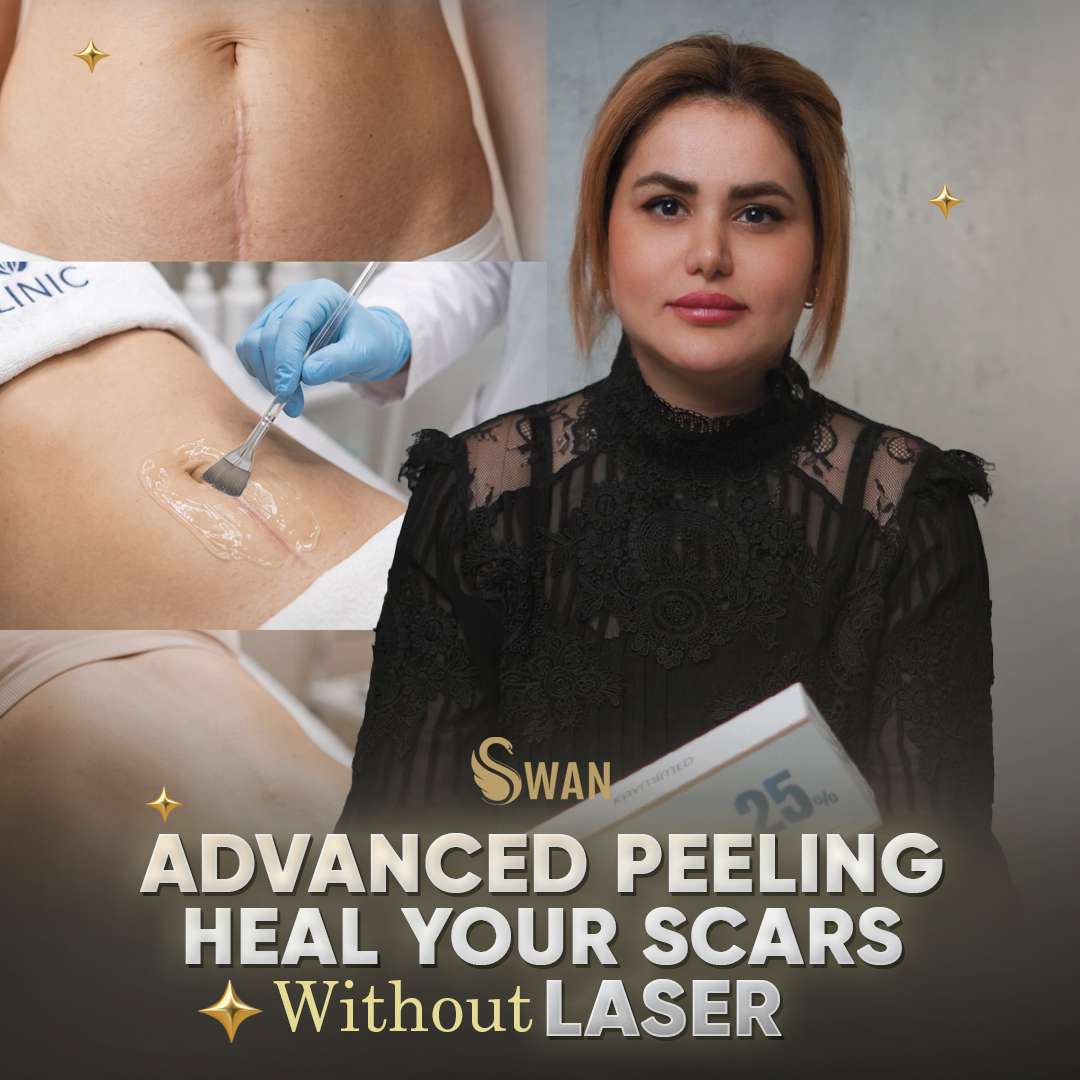
Post-Surgical Scar Treatment in Dubai: How Advanced Peeling Repairs Skin Without Laser
Most people do not think about a surgical scar until they are standing in a fitting room three weeks before an event, holding a dress they wanted to wear months ago. That is usually when the question about scar treatment actually gets asked, not in the hospital, not during the first follow-up appointment, but later, once the scar has settled into whatever shape it is going to hold.
A C-section scar, a tummy tuck line, an old appendectomy mark: they all behave the same way in one respect. They thicken unevenly, stay pink or dark longer than expected, and sit stiffer than the skin around them. Most clients arrive having already tried silicone sheets, scar creams, or vitamin E oil for months, sometimes years, before asking what else exists. Those products work on the surface. They rarely reach the deeper, disorganized tissue that is actually holding the scar’s texture and color in place.
Advanced chemical peeling is one of the more overlooked ways to address that deeper layer, mostly because laser tends to dominate the conversation whenever scars come up.
How a scar peel actually works
A peel formulated for scar tissue is applied directly onto the raised or fibrous area rather than across an entire section of skin. The acid solution causes controlled, superficial injury to the outer layers of that tissue. It sounds like the opposite of healing, deliberately irritating skin that has already been through enough, but that controlled injury is exactly what prompts the body to lay down new collagen and elastin in place of the disorganized tissue that formed the first time around.
Research on acne scar treatment published in Frontiers in Medicine notes that chemical peeling works by controlled removal of damaged epidermal and dermal tissue, which allows the epidermis to regenerate and the scar to repair itself. That regeneration typically starts within a day of the procedure and completes within seven to ten days, which is a shorter timeline than most people assume when they hear the word peel used for something as stubborn as scar tissue.
This process softens raised texture, evens out discoloration against the surrounding skin, and gradually reduces how visible a scar is over a series of sessions. It responds well to surgical scars, cesarean scars, and some post-acne indentations, though the strength of the solution and the number of sessions shifts with scar age and skin type.
Depth is where most of the decision-making happens. A superficial peel works only on the outermost layer and suits scars that are still fairly fresh, still pink, still actively remodeling. A medium-depth peel reaches further into the dermis, which is where the thicker, more established scar tissue actually lives. Abdominal skin and facial skin do not respond identically either. The skin across a stomach or hip is thicker and slower to turn over than facial skin, so a scar in that area often needs a stronger solution or a longer course than a comparable scar on the face would.
Why peeling holds up where laser sometimes does not
Fractional laser gets recommended by default in a lot of clinics, and for some scars it genuinely is the stronger option. But heat-based devices carry real risk for anyone with a medium to deep skin tone, which describes a large share of the people coming through the door in Dubai. Post-inflammatory pigmentation after laser can end up more visible than the scar it was meant to treat, particularly on skin that tans easily or holds color longer after sun exposure.
Peeling sidesteps that risk because it works chemically rather than through heat. There is no thermal injury to the surrounding skin, which matters for anyone whose skin already reacts to the heat and humidity that define most of the year here. It also comes with no mandatory downtime, so clients are not stepping out of a session needing to avoid the outdoors, an air-conditioned office, or a dinner reservation that evening.
People often ask whether a peel can genuinely compete with laser on a scar that has been sitting there for years. It depends on the scar. Peeling tends to perform best within the first two years of a scar’s life, while tissue is still actively remodeling itself, though older scars can still see real softening across a longer course of sessions.
Who tends to see the clearest results
A raised, red, relatively recent scar from a cesarean or an abdominal procedure generally responds faster than a flat, pale scar that settled into place a decade ago. Skin type matters as much as scar age. Darker skin tones tolerate chemical peels with far less risk of pigment disruption than they do heat-based devices, which is part of why this approach fits so naturally for a client base as mixed as Dubai’s residents and long-term expatriates.
Someone treating a scar from a procedure three months ago is in a different position from someone addressing a childhood scar that has never changed on its own. The number of sessions, and the strength of the peel used, reflects that difference rather than following a fixed protocol.
A short course of sessions is usually the clearest way to understand what this treatment involves before committing to a longer plan. Here is roughly what that looks like in practice.
- An initial consultation to assess the scar’s age, depth, and the surrounding skin tone, since this determines which peel concentration is appropriate to start with.
- A first session using a milder solution, mainly to see how the skin responds before increasing strength later on.
- Follow-up sessions spaced several weeks apart, giving the skin time to fully regenerate between visits.
- A final review comparing texture, color, and pliability against the photos taken at the first consultation.
Most clients notice the earliest texture changes within the first month, though full results build gradually across the whole course rather than after one visit. Rushing the pace tends to backfire, since scars that heal under too much pressure risk new irritation rather than smoother skin.
Setting expectations honestly matters more here than almost anywhere else in aesthetic medicine. A peel will not erase a scar completely, and anyone promising that outcome is not being straightforward. What a well-managed course delivers is a scar that sits flatter, blends closer to natural skin tone, and draws far less attention than it did before treatment began, which for most clients is the actual goal in the first place.
Living with a healing scar through Dubai’s climate
The days right after a peel session need real attention even without formal downtime. Sun protection is not optional here. UV intensity stays high for most of the year, and it reflects off pavement, glass, and pool decks in a way that catches people off guard even when they think they are being careful. A scar in its healing window is more vulnerable to pigment change than the skin around it, so consistent broad-spectrum sunscreen matters more in these weeks than almost any other step in the process.
Beyond sun exposure, clients are usually advised against picking at any flaking skin, to keep the area gently moisturized, and to hold off other active ingredients on that specific patch until it has settled. The constant shift between outdoor heat and cold, dry, air-conditioned interiors adds its own complication. That swing dehydrates skin faster than people expect, and dehydrated skin heals less predictably, so drinking enough water and keeping the area consistently moisturized matters more here than it might somewhere with a milder climate.
For scars connected to pregnancy or delivery, this phase often overlaps with a broader post-pregnancy skin repair plan, since the abdomen is healing on more than one front at once. Clinics that pair scar peels with complementary treatments, whether a derma peeling facial for the surrounding skin or microneedling treatments for deeper texture concerns, tend to build that into the schedule once the initial healing phase is behind the client.
What this looks like at Swan Aesthetic Clinic Dubai
The question underneath most of this is simple: will this actually change how my scar looks, or would something else serve me better. That is exactly what an in-person assessment settles, because a scar that reads as straightforward in a photo can behave very differently once someone examines its depth, its color against surrounding skin, and how the tissue moves when pressed.
At Swan, that assessment starts with a direct look at the scar rather than a generic recommendation handed out in advance. Clients considering a scar removal peel are walked through a realistic timeline for their specific case, including how many sessions are likely needed and what a fair outcome looks like given the scar’s age and their skin type. Anyone ready to have their scar properly assessed can book a consultation and start from there rather than guessing at what might work.
Read Recent Articles
Acne Scar Treatment Dubai: How Q-switched Laser Resurfacing Works
Good lighting is unforgiving. A phone camera set to daylight mode picks up texture that a bathroom m


