
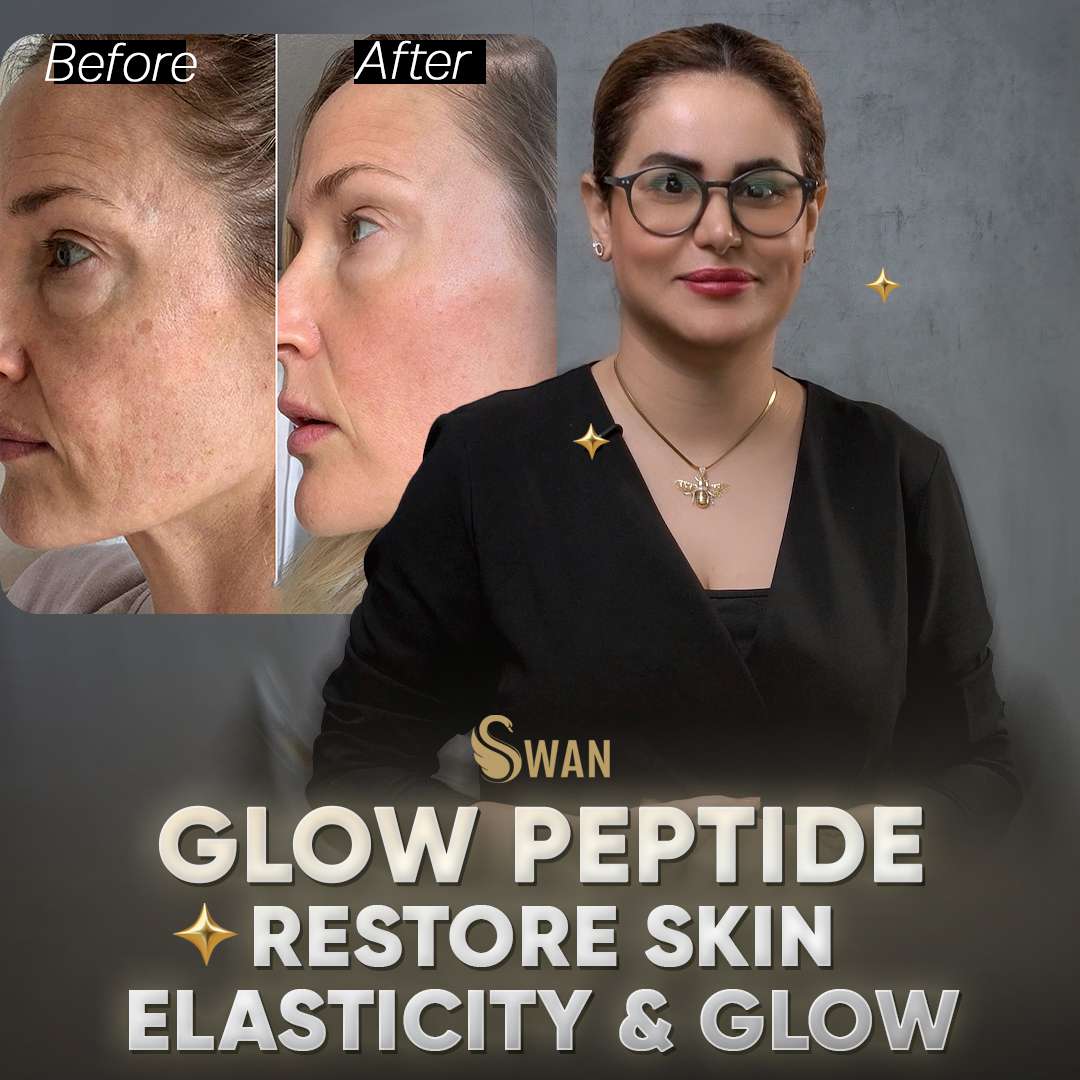
Glow Peptide Treatment Dubai: How Peptide Injections Restore Skin Elasticity Around the Eyes and Face
The eye area tends to age faster than the rest of the face, and most clients notice it long before anyone points it out. A full night’s sleep stops erasing the tiredness the way it used to. The skin under the eyes looks thinner, a little hollow, occasionally papery in a way no amount of eye cream quite corrects. It is one of the more common frustrations clients bring into a consultation: doing everything right for the skin and still watching this one area age on its own timeline.
Skin around the eyes is thinner than almost anywhere else on the face, with less fat and fewer oil glands supporting it, which is part of why it shows fatigue, dehydration, and lost elasticity earlier than the cheeks or forehead. Topical products rarely reach deep enough to rebuild what has actually thinned. Glow Peptide treatment is built to work at that deeper level instead.
What peptides actually do once they reach the skin
Peptides are short chains of amino acids that act as signaling molecules rather than raw building blocks. Instead of adding volume the way a filler does, they instruct the skin’s own fibroblast cells to increase collagen and elastin production, essentially prompting the tissue to behave the way it did earlier in life. A Glow Peptide session typically combines several of these signaling compounds, including tripeptides and a copper-binding peptide complex often referred to in dermatology literature as GHK-Cu, delivered through a series of fine microinjections into the treatment area.
Tripeptides work through a slightly different pathway than the copper-binding component, generally by mimicking fragments of collagen itself. When the skin detects these fragments, it interprets them as a signal that existing collagen has broken down and responds by ramping up production to replace it. Combining multiple peptide types in one formulation means several of these signaling pathways get activated at once, rather than relying on a single mechanism to do all the work.
The copper-binding component is one of the more studied parts of this blend. Copper plays a role in the enzymatic processes that build and cross-link collagen fibers, which is part of why formulations containing it are frequently used to target areas where skin has visibly lost firmness, such as around the eyes, along the jawline, or across the cheeks.
Peptide research broadly supports this mechanism. A 2025 study in the Journal of Microbiology and Biotechnology found that peptide supplementation produced measurable improvements in skin elasticity markers, along with increased dermal density, with benefits still present after a period without continued use. That particular study examined oral peptide intake rather than injectable delivery, but the underlying signaling mechanism it measured is the same one injectable peptide treatments are built to trigger more directly and locally.
Does that mean results show up immediately? Not quite. Peptides work by prompting the skin to rebuild its own structure gradually, so most clients notice a subtle brightness right after a session, while the firmer, more elastic quality that shows up in before-and-after photos tends to build across a full course of treatments rather than appearing after one visit.
Why the under-eye area responds so well to this approach
The before-and-after difference clients see most often with Glow Peptide treatment shows up specifically around the eyes: less visible hollowing, a smoother transition between the lower lid and cheek, and skin that looks less crepey under makeup or in daylight. That area benefits disproportionately because it starts from a thinner baseline, so even a modest improvement in collagen density reads as a more noticeable visual change than the same improvement would elsewhere on the face.
Clients in Dubai dealing with under-eye concerns often point to the same combination of causes: long hours, screen time, and a climate that pulls moisture out of skin faster than it can be replaced. Air conditioning and sun exposure both contribute to dehydration around the eyes specifically, since that skin has fewer oil glands to compensate for what the environment strips away.
That combination is part of why a treatment addressing structure and hydration together, rather than one or the other, tends to produce a more complete result for this specific area. Dubai’s pace matters here too. A session takes under an hour with essentially no downtime, which fits into a lunch break far more easily than a treatment requiring a day or two of visible recovery.
Who tends to see the clearest results
Clients dealing with early hollowing under the eyes, fine crepey texture, or an overall loss of facial elasticity tend to see the most noticeable benefit from this treatment. It works well as a standalone option for someone specifically bothered by the eye area, and also as part of a broader plan alongside other elasticity-focused treatments elsewhere on the face.
- Clients in their thirties noticing the earliest signs of thinning under the eyes, often before anyone else has commented on it.
- Clients recovering from a period of poor sleep, illness, or stress, where the eye area shows the aftermath more visibly than the rest of the face.
- Clients already using topical retinol or eye creams who want a treatment that reaches deeper than a product applied at home ever could.
- Clients looking to extend the results of a previous injectable treatment by adding a maintenance session between larger procedures.
Setting realistic expectations matters here as much as anywhere else. Glow Peptide treatment improves skin quality and elasticity, but it does not replace a filler for someone dealing with significant volume loss under the eyes, and it is worth discussing that distinction clearly at the first consultation so the right treatment gets matched to the right concern.
What a session and recovery actually look like
Sessions follow a fairly consistent structure. A topical numbing agent is applied to the treatment area beforehand, since the skin around the eyes is thin and more sensitive than other parts of the face. The peptide blend is then delivered through a series of fine microinjections across the area, usually taking well under thirty minutes from start to finish.
Mild swelling or small bumps at the injection sites are common immediately afterward and typically settle within a day. Bruising is possible given how delicate the under-eye area is, though it is generally mild and easily covered with makeup once the initial redness has faded. Clients are usually advised to avoid rubbing the treated area, skip intense sun exposure for the first day or two, and keep the skin gently hydrated while it settles.
Heat is worth being careful of too, particularly given how quickly outdoor temperatures climb through most of the year. Stepping straight from a session into direct sun or a hot car can make the mild swelling more noticeable than it would be otherwise, so a few hours somewhere cool tends to make the first day more comfortable.
Most clients need a short course of sessions spaced several weeks apart to see the fullest result, after which occasional maintenance sessions help sustain the improvement over time. Clients specifically interested in the PDRN component of the peptide family on its own can look into PDRN eye rejuvenation as a more targeted option, while those dealing primarily with pigmentation under the eyes rather than texture might get more value from a closer look at under eye dark circles treatment instead.
Building this into a broader elasticity plan
Glow Peptide treatment holds up well on its own, but clients focused on facial elasticity more broadly often pair it with collagen stimulation treatments elsewhere on the face, building a more complete approach to firmness rather than treating the eye area in isolation. Clients curious about how this compares to Swan’s other injectable options can also review the full range of skin booster treatments available before settling on a specific plan.
None of these combinations need to be worked out in advance. A proper assessment can identify which areas are aging fastest and build a schedule around that, rather than treating every part of the face the same way.
Planning a session with Swan Aesthetic Clinic Dubai
The eye area rarely ages on the same timeline as the rest of the face, and Glow Peptide treatment exists precisely to address that gap directly, working at a level topical products cannot reach. The right combination of sessions depends on how much the skin has actually thinned and where a client’s elasticity concerns are most pronounced, which is exactly what a consultation is meant to establish before anything is injected. No two clients arrive with the same starting point, and the treatment plan built at Swan Aesthetic Clinic Dubai reflects that rather than following a fixed protocol.
Clients ready to see what this treatment could do around their eyes or across the face can book a consultation and start with an honest assessment rather than guessing at what their skin actually needs.
Read Recent Articles


Skin Boosters Dubai: Complete Treatment Guide & Expert Tips 2025
Understanding Skin Boosters: Dubai’s Go-To Beauty Treatment Hey there! Wondering why everyone
Melasma Treatments in Dubai – Gentle, Effective Solutions at Swan Aesthetic Clinic
Melasma is one of the most common skin concerns we see in Dubai — especially among women who spend


