
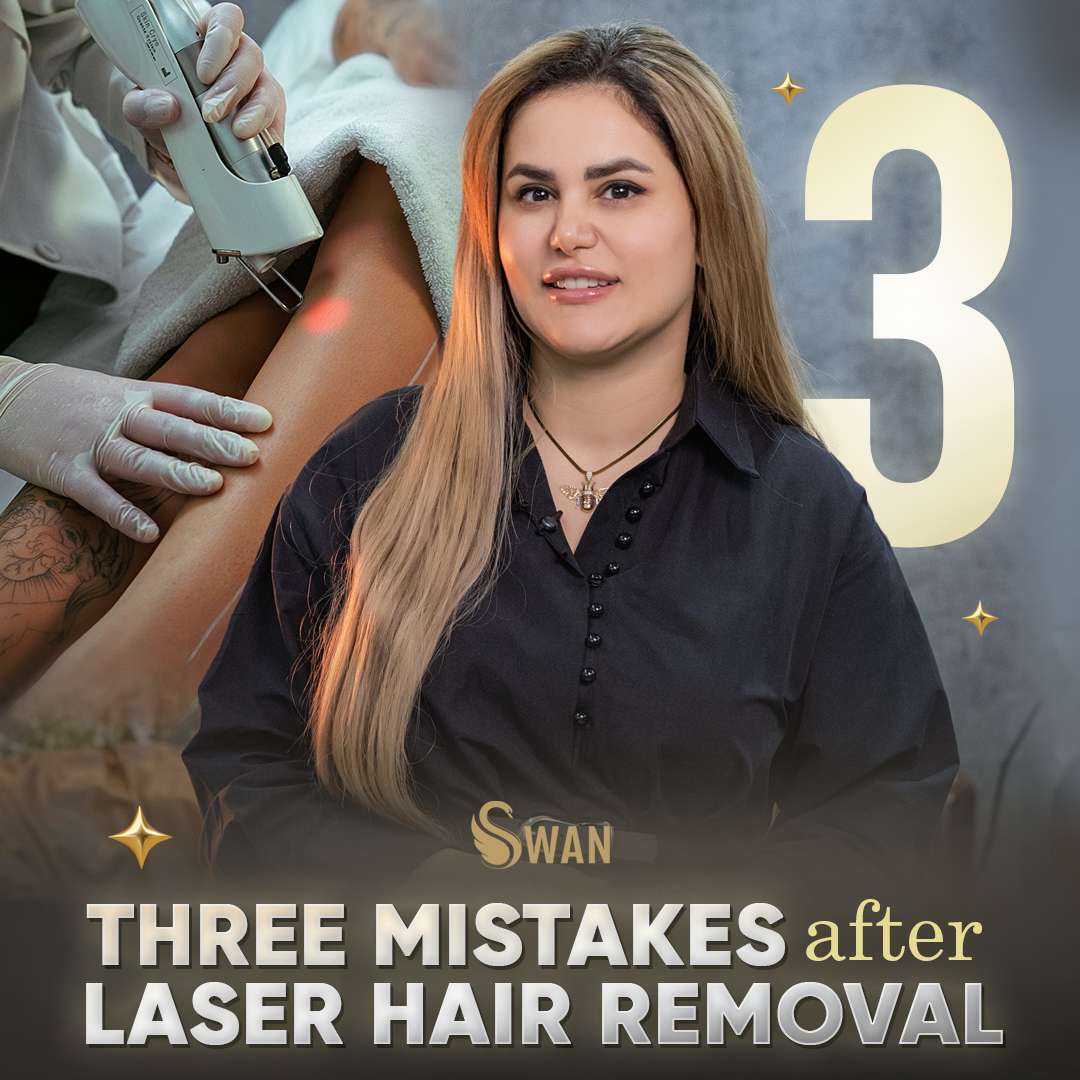
Three Mistakes People Make after Laser Hair Removal in Dubai
You booked the session. You sat through the buzzing, the cool gel, the faint smell of singed hair that nobody warns you about. Then you went home and, without quite meaning to, undid part of the work.
That is the part almost nobody talks about. Laser hair removal does not end when you leave the clinic. What happens in the days and weeks after each session, and sometimes what happens inside your body long before you ever booked an appointment, decides whether the treatment actually delivers the smooth, low-maintenance result you were expecting.
At Swan Aesthetic Clinic Dubai, three mistakes come up again and again with clients who tried laser hair removal elsewhere, or who came in expecting results faster than their skin and hair cycle allow. None of them are really about the laser itself. They are about timing, sun exposure, and the internal factors that quietly influence how hair grows back.
Mistake one: Coming back too soon, or too late
Hair does not all grow at once. At any given moment, some follicles on your leg or underarm are actively growing, some are resting, and some are shedding. Laser energy only damages a follicle effectively while it is in its active growth phase, which is why a single session was never going to finish the job. Come back too early and you are treating hair that has not entered growth yet, which wastes a session without adding much benefit. Wait too long between visits and the follicles you did damage start recovering, and some of that early progress fades.
The right interval depends on the treatment area, the device used, and how your own hair cycle behaves, which is exactly why this gets assessed session by session rather than following a generic calendar. A newer rotational approach that alternates Nd:YAG, diode, and Alexandrite lasers across a course of sessions reduced hair by just over 75 percent at the six month mark in a recent clinical study, which says something important: consistency and correct spacing across the full course matter as much as the technology itself. Clients considering laser hair removal at Swan go through this timing conversation at the very first consultation, not as an afterthought.
Mistake two: Underestimating Dubai’s sun
Here is the mistake that catches even careful clients off guard. Laser hair removal targets pigment in the hair follicle. Tanned or sun exposed skin also carries more pigment, which means the laser has a harder time telling hair from skin. That can mean a less effective session, or in worse cases, burns and patches of hyperpigmentation that take months to fade.
This is where living in Dubai adds its own layer of difficulty. Residents move constantly between blazing outdoor heat and heavily air conditioned interiors, often with only a short walk between a car and a building, but even that short walk carries real UV exposure most of the year. A beach afternoon in JBR, a weekend by the pool, or simply parking and walking into work under the midday sun can all leave skin more sun affected than it looks. Add in the fact that summer is peak laser hair removal season here, since people stay indoors more and want results ready before autumn travel and events, and you get a lot of clients booking sessions during exactly the months when sun protection matters most.
The fix is not complicated, but it does require actual discipline rather than good intentions. Daily SPF, even on days spent mostly indoors, matters more here than almost anywhere else, because reflected light off pavement and glass adds up. Covering treated areas for a few days after each session gives the skin room to calm down before it faces the sun again. And being honest with your practitioner about any recent sun exposure, even a short walk, lets them adjust the session rather than treat skin that is not ready for it.
Mistake three: Ignoring what is happening inside the body
The third mistake is the one people notice last, usually after several sessions when results seem to be plateauing for no obvious reason. Hair growth is not purely a surface issue. It responds to what is going on hormonally and nutritionally, and those internal shifts can work against even a well spaced, well protected treatment course.
A few things worth knowing:
- Hormonal changes, whether from stress, thyroid function, or conditions like PCOS, can stimulate new hair growth in areas that were previously treated successfully, which can look like the laser stopped working when the real cause is hormonal.
- Certain vitamin deficiencies, iron and vitamin D in particular, have been associated with changes in hair growth patterns, and correcting a deficiency can sometimes improve how consistently treated areas respond.
- Medications that affect hormone levels, including some contraceptives and thyroid medications, can also shift how hair behaves during a treatment course, which is worth mentioning at your consultation even if it feels unrelated.
None of this means laser hair removal stops working. It means the full picture, not just the laser settings, decides the outcome. That is also why a proper consultation asks about more than just skin tone and hair color.
Is it normal to see a few stray hairs return in an area you thought was finished? Yes, and it does not automatically mean something went wrong. Fine, sparser regrowth is a normal part of the process for many people, especially in areas influenced by hormonal cycles, and a touch up session usually addresses it without starting over.
What good aftercare actually looks like
Aftercare at Swan is not a printed sheet you glance at once. Clients get direct guidance on timing between sessions based on how their own skin and hair are responding, practical sun protection habits suited to actually living in Dubai’s climate rather than generic advice written for a cooler country, and, where relevant, a conversation about whether hormonal or nutritional factors might be worth addressing alongside the laser sessions themselves. For clients dealing with visible sun damage or uneven pigmentation from years of exposure, our pigmentation and melasma guide covers how Dubai’s climate specifically affects skin tone over time, which is often relevant for the same clients booking laser hair removal.
For those weighing which laser technology suits their skin type, our comparison of the Duetto MT EVO system walks through precision and comfort in more depth, and clients who still have basic questions before their first session often find our frequently asked questions page useful before booking.
Getting laser hair removal right in Dubai is rarely about finding a stronger machine. It is about respecting the timing your body needs, protecting skin that lives under near constant sun exposure, and paying attention to the hormonal and nutritional factors that quietly shape how hair grows back. A proper consultation at Swan Aesthetic Clinic covers all three, so the sessions you book actually build on each other instead of working against your own biology.
Read Recent Articles

Laser Hair Removal Treatments
Achieve Smooth, Hair-Free Skin at Swan Aesthetic Clinic Tired of the endless cycle of shaving, waxin

Choosing the right laser wavelength when your skin has some color to it
By July and August, most skin in Dubai isn’t neutral anymore. Weekends at JBR, beach clubs, an

Laser Hair Removal with Alex & NdYag
Tired of temporary hair removal solutions? Swan Aesthetic Clinic Dubai offers a revolutionary approa


