
Not every aesthetic treatment is right for you: why the best choice depends on who you are
Ask a thoughtful person which color is best, and they will ask something back. Best for a bedroom wall, a wedding dress, or a car that sits outside in a Dubai August? The question only makes sense once you know what the color is for and who has to live with it.
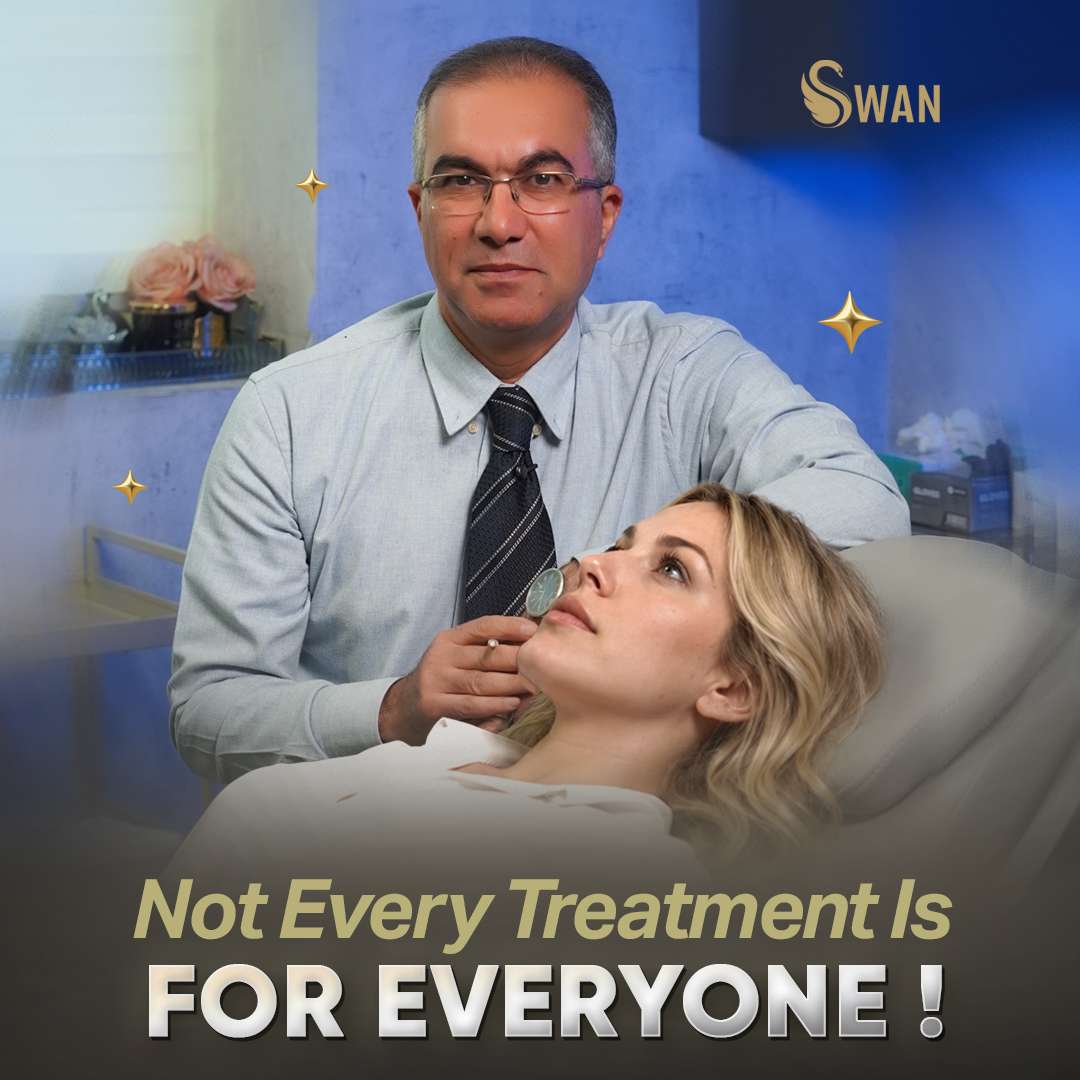
Choosing an aesthetic treatment works the same way. Dr. Hamid Mohajerinejad, General Practitioner in Aesthetic Medicine at Swan Aesthetic Clinic, makes this point to almost every new client who sits in his chair. “There is no one size fits all solution,” he says. The right choice depends on your needs, your goals, and your individual features. He describes his role as matching what you hope for with what actually suits you, guided by experience, evidence, and a close reading of your face.
That sounds obvious. In practice, it runs against most of what people see before they ever book an appointment.
Why popular and suitable are two different things
Dubai lives on its phone. Treatments trend the way restaurants do here: one month everyone is asking about a particular injectable, the next it is a lifting technique that a well-followed account posted between a brunch and a beach club. Friends compare results over dinner, and a name heard three times in a week starts to feel like the obvious next step.
Research from the region shows how strong that pull has become. In a 2024 Al-Ahsa study of residents in Saudi Arabia’s Eastern Province, 90.4% of participants agreed that cosmetic procedures are popular among social media influencers, and the researchers concluded that influencers may be shaping some people’s decisions to undergo treatment, especially among young women.
Popularity tells you a treatment exists and that it worked for somebody. It tells you nothing about your skin thickness, the way your face carries volume, how your skin reacts to heat, or whether your concern is the one that treatment was designed for. A filler result that looks elegant on one face can look heavy on another with a different bone structure. A booster that gives real radiance to dehydrated skin will do very little for laxity with a structural cause.
The trend is someone else’s answer to someone else’s question.
What a proper assessment looks at
Before recommending anything, Dr. Hamid works through questions that have nothing to do with what is fashionable this season. His background shapes the order. He spent years in family medicine and occupational health before focusing on aesthetics, so the first thing he considers is whether a treatment fits your broader health picture. Only after that does he ask whether it fits the concern you came in with.
The factors below are the ones that most change a recommendation, and knowing them before your first appointment makes the conversation far more useful.
- Your skin type and how it responds to heat, light, and inflammation, which matters a great deal in a city with strong UV exposure through most of the year.
- The structure underneath the skin, including bone, fat pads, and muscle activity, since the same line on two faces can come from entirely different causes.
- Your medical history, current medications, pregnancy or breastfeeding, and any past reactions to injectables or skin procedures.
- Your calendar, including travel, outdoor sport, and upcoming events, because downtime that suits one person can be impossible for another.
- What you actually want to see in the mirror and how soon, so that expectations and likely outcomes are lined up honestly from the start.
None of these appear on a treatment menu, and none can be judged properly from a photo on a screen. They are the reason two people with the same concern can leave the same clinic with two very different plans.
Same concern, different answers
Take fine lines around the eyes. For one client in her early thirties, the lines appear only when she smiles and come almost entirely from muscle movement. A conservative anti-wrinkle treatment dose may be a sensible place to start, with a review two weeks later.
For another client of the same age, the picture is different. She works long hours in a heavily air-conditioned office in DIFC, spends weekends outdoors, and the lines are visible even when her face is at rest. The skin itself feels thin and dry. Relaxing the muscle alone would miss the real problem. Improving hydration and skin quality with skin booster treatments could do far more for her, and her plan might later combine both approaches across several months.
Dullness is another good example. It can come from dehydration, congestion, pigmentation, or slower cell turnover, and each of those causes points toward a different treatment. After a long summer here, a tired complexion is frequently a mix of all four: months of sun, sweat, and air conditioning leave skin both dehydrated and uneven at once. Treating only one layer of that problem produces a result that feels incomplete, which is why the order of treatments matters as much as the treatments themselves.
Softening along the jawline might call for collagen stimulation in one person and structural volume support in another, depending on whether the skin has lost firmness or the deeper tissue has shifted with age.
For Dr. Hamid, the order never changes. Understand the cause first, and choose the treatment second. A client who arrives asking for a specific product name is always welcome, and that request is a useful starting point for the conversation, but it is a starting point and nothing more.
When the honest answer is not yet
Some consultations end without any treatment at all, and that can be the most valuable outcome of the visit. A client might hope for lip volume three days before her wedding, when swelling could still be visible in the photographs. Another might want a procedure that conflicts with a medication, an active skin infection, or a pregnancy. Someone else might be asking for a change that their features simply cannot carry without looking overdone.
What should a good clinician do in those moments? Say so clearly, explain why, and offer either an alternative or a better time. Dubai’s cooler months are packed with weddings, galas, and family gatherings, and the pressure to fit a treatment around a date is real. Planning a few weeks ahead leaves room for results to settle and for minor bruising or swelling to fade well before the event.
This kind of restraint is what keeps results looking like you rather than like a trend. Swan’s approach to natural-looking results starts from the same idea: modest changes matched to the face and reviewed over time, never pushed into a single session because a client is in a hurry.
Saying no, or saying wait, protects the client. It also protects the trust that makes a long-term plan possible.
Aftercare belongs in the plan from the start
A treatment chosen well can still be undermined by what happens in the days after it. Aftercare instructions vary with each procedure, and your clinician will tailor them to you, but a few principles apply to most injectable and skin treatments.
For the first day or so, it usually helps to avoid strenuous exercise, saunas, steam rooms, and heavy pressure on the treated area. Sun protection matters more than ever. Here that means a broad-spectrum sunscreen every morning, reapplied whenever you are outdoors, even for the short walk from a car park to an office lobby. Heat can increase swelling after some treatments, so a quieter evening at home tends to be a better choice than an outdoor event on the same day.
Follow-up appointments matter too. Some treatments show their full effect after two weeks, while others build gradually over several months. A review visit lets your clinician adjust the plan based on how your skin actually responded, rather than repeating the same treatment by default.
If anything feels unusual after a procedure, such as increasing pain, spreading redness, or a change in skin color around an injection site, contact the clinic promptly instead of waiting for your next appointment. Early contact makes small problems easy to manage.
Starting with a conversation at Swan Aesthetic Clinic Dubai
Every plan at Swan begins with listening. You can read more about Dr. Hamid Mohajerinejad and his clinical background before your visit, and when you feel ready, you can book a consultation to talk through your concerns, your health history, and what you would genuinely like to change.
You do not need to arrive knowing which treatment you want. Arriving with a clear sense of what bothers you, what your weeks look like, and how you would like to feel about your reflection is more than enough. The rest is the clinician’s work: examining, asking, explaining the options that fit, and being honest about the ones that do not.
The best treatment is rarely the one everyone is talking about. It is the one chosen for your face, your health, and your life, and it should look, months later, as though nothing was done at all.


