

Nd:YAG Laser for Surgical Scars in Dubai: How Laser and Vitamins Work Together to Soften Scar Tissue
Fractional laser and Nd:YAG both start with the same word, laser, and end up describing two different processes entirely, which is where most of the confusion around scar treatment begins.
A C-section scar, an appendectomy line, a scar from something not chosen at all. By the time someone’s asking about treatment, the surgery itself is old news. What’s left is a line of tissue that heals differently than the skin around it, and that difference is what a targeted laser approach is actually addressing.
What’s happening under a scar that makes it look the way it does
Surgical scar tissue forms through a different collagen process than the skin surrounding it. Instead of the organized, woven collagen structure of undamaged skin, scar tissue lays down collagen in parallel bundles, which is part of why scars often look shinier, feel firmer, or sit slightly raised or indented compared to the skin around them. Pigmentation frequently settles unevenly too, sometimes darker than the surrounding tone, sometimes lighter.
Fractional laser treatment works by creating controlled, microscopic zones of injury across the scar’s surface. That injury prompts the skin to begin a fresh remodeling process, gradually breaking down the disorganized collagen and replacing it with something closer to the surrounding tissue’s structure. Texture softens. Surface irregularity smooths out over a series of sessions rather than all at once.
Nd:YAG brings something different to the same problem. Running at 1064nm, it penetrates more deeply into the dermis than most other laser wavelengths, reaching the layer where fibrotic scar collagen actually sits. A 2025 study on postburn hypertrophic scars found that combining a 1064nm Nd:YAG laser with fractional treatment produced significantly better outcomes than Nd:YAG alone, both in scar texture and in patient satisfaction with the aesthetic result. That combination logic, using more than one mechanism rather than relying on a single wavelength, is exactly what a signature protocol built around Nd:YAG plus a fractional element is designed to do.
Where the vitamin component fits in
The laser work handles structure. Vitamins layered into the same protocol address something the laser alone doesn’t touch as directly: pigmentation and overall skin quality around the treated area. Uneven tone along a scar line, whether darker or lighter than the surrounding skin, responds partly to how well the skin’s surface is supported during the remodeling process the laser has triggered. A combined approach treats the structural problem and the surface problem at the same time, rather than addressing one and leaving the other for a separate visit.
This matters more in Dubai than it might somewhere with less sun. Scar tissue is particularly reactive to UV exposure while it’s actively remodeling, and pigmentation changes that develop during this window can be harder to reverse than the original unevenness. Someone recovering from a C-section in the middle of summer here, moving between air-conditioned recovery and whatever sun exposure daily life involves, is dealing with a healing environment that works against the scar rather than for it unless sun protection becomes a genuine habit rather than an afterthought.
Who this actually suits, and when laser isn’t the obvious first choice
Surgical scars respond differently depending on age, depth, and how the body originally healed them. A scar from six months ago behaves differently under laser than one from ten years ago, and a raised, hypertrophic scar calls for a different approach than a flat, discolored one. This is why the treatment plan gets built around the individual scar rather than a fixed protocol applied the same way to everyone who walks in.
Skin tone matters too, and it’s worth being direct about this rather than glossing over it. Heat-based lasers carry a real risk of post-inflammatory pigmentation on medium to darker skin tones, which describes a large share of clients in Dubai. For anyone in that position, or anyone who would rather avoid a heat-based device altogether, Swan’s peel-based scar treatment is a genuinely comparable option that works chemically rather than thermally, and it’s worth reading before assuming laser is the only route. A proper consultation weighs both against the specific scar and skin tone in front of the practitioner, rather than defaulting to whichever treatment happens to get recommended first.
A few signs tend to indicate this Nd:YAG and vitamin approach specifically is worth discussing.
- A scar that still looks shiny, raised, or notably different in texture from the surrounding skin months or years after the original surgery.
- Uneven pigmentation along the scar line that hasn’t faded with time or topical treatment.
- A scar in a visible area, the abdomen, a limb, anywhere that clothing choices are shaped around covering it.
- Previous scar treatment that improved things somewhat but left the result short of what the person was hoping for.
None of these signs guarantee the same number of sessions or the same outcome for every scar. A practitioner assessing the tissue directly, its age, depth, and how it’s already responded to healing, will give a far more accurate picture than any general description can.
There’s a fair question worth answering plainly here: does this actually make a scar disappear completely? Generally, no, and any claim to the contrary should be treated with some skepticism. What this combination realistically does is soften texture, even out pigmentation, and make the scar considerably less visually prominent. For most clients, that’s the actual goal anyway. A scar that’s less noticeable and better blended with surrounding skin tends to matter more day to day than a theoretical complete erasure that isn’t realistic for most scar tissue regardless of the technology used.
What the sessions and recovery actually look like
Sessions are generally well tolerated, with most clients describing a warming or mild stinging sensation during treatment rather than significant pain. Some redness and mild swelling around the treated area is normal immediately afterward and typically settles within a day or two, depending on the scar’s size and how aggressive the settings were for that particular session.
The number of sessions and the spacing between them depend entirely on the scar itself, its age, size, and how the skin responds to the first treatment. Older, more established scars generally need more sessions than recent ones, since the collagen structure has had longer to set. This is one of the clearest examples in aesthetic treatment where a fixed session count promised upfront should raise questions, since the honest answer only becomes clear once a practitioner has actually assessed the tissue.
Aftercare centers heavily on sun protection, more so here than almost any other laser treatment given how much of daily life in Dubai involves direct sun even outside the hottest months. Broad-spectrum sunscreen on the treated area isn’t optional during the remodeling period, and covering the area when possible during peak sun hours supports the pigmentation side of the treatment as much as the sunscreen itself does. Staying hydrated and avoiding harsh products directly on the treated skin for the first several days after each session also supports the healing process running underneath.
Booking a consultation at Swan Aesthetic Clinic Dubai
Clients dealing with a surgical scar that’s bothered them for longer than they’d like to admit are often surprised by how much of the discomfort was about the visible unevenness rather than the scar’s existence itself. For anyone treating acne scarring alongside a surgical scar, Swan’s Q-switched laser resurfacing approach covers that related concern in more depth, and clients addressing texture more broadly across the treated area can also look at the comprehensive laser rejuvenation approach or Swan’s stretch mark treatment where both concerns sit close together, as they often do after a C-section.
Anyone ready to talk through what a specific scar would realistically respond to, laser, peel, or a combination of both, is welcome to reach the team through Swan’s contact page and start with an assessment rather than guessing from a general description online.
Read Recent Articles
Acne Scar Treatment Dubai: How Q-switched Laser Resurfacing Works
Good lighting is unforgiving. A phone camera set to daylight mode picks up texture that a bathroom m
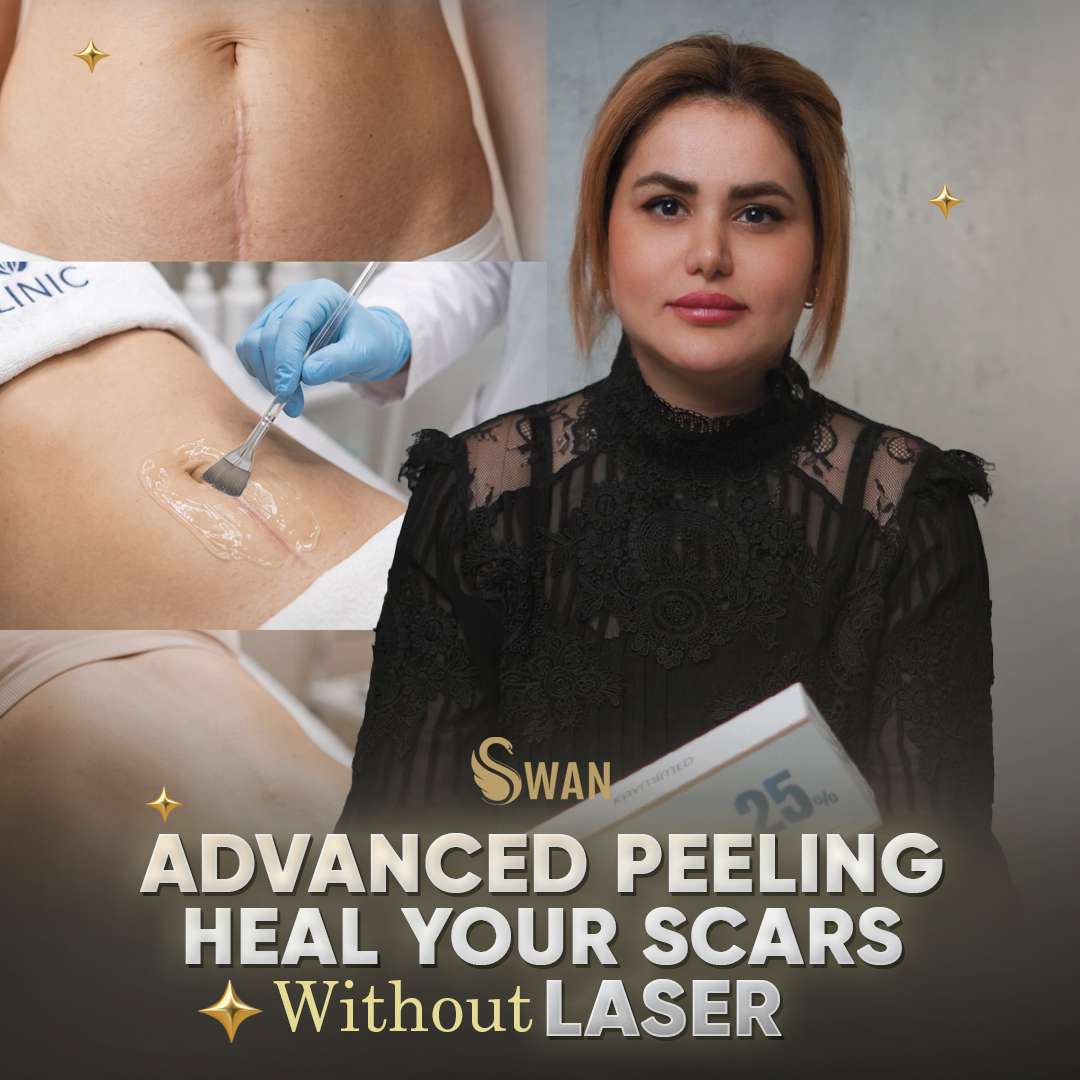
Post-Surgical Scar Treatment in Dubai: How Advanced Peeling Repairs Skin Without Laser
Most people do not think about a surgical scar until they are standing in a fitting room three weeks


