

Why Skin Feels Tight From November: Dry Skin Treatment in Dubai’s Winter
The first cool mornings reach Dubai sometime in November, and they bring a small surprise at the bathroom sink. The foaming cleanser that felt perfectly fine through August now leaves the cheeks tight within minutes. A serum that never caused trouble starts to sting around the nose. By lunchtime, foundation catches on dry patches near the brows.
Nothing is wrong with the products. The air has changed, and the skin is reacting to it. For people who spent the summer fighting shine, dry skin treatment in Dubai suddenly becomes a real question, and most of what helps starts at home, with a few adjustments made early, before mild tightness turns into flaking and irritation.
How the air shifts after the summer months
Summer here means heavy, sticky air that keeps the skin damp. November is different. According to the National Center of Meteorology, as reported by Gulf News, temperatures drop by around four to six degrees compared with October, and the lowest daily humidity readings average between 29 and 39 percent across the country. Cooler air holds less water than hot air, so there is less moisture around to slow evaporation from the skin.
Indoors, the change is quieter but just as drying. Offices in DIFC and Business Bay keep the air conditioning running all winter, and air conditioning pulls water out of the air as it cools it. Moving between the two all day gives the skin little chance to settle.
The weather also pulls people outside. Beach walks in Jumeirah, terrace brunches, and weekend desert trips bring more sun and wind on the face. And once the mornings feel cool, the showers get hotter and longer.
What a stressed skin barrier means
The outermost layer of the skin is made of flattened cells held together by fats, a little like bricks set in mortar. That layer has two jobs. It keeps water in, and it keeps irritants, pollutants, and microbes out.
When the mortar thins, both jobs suffer. Water escapes faster than the skin can replace it, so the surface dries out and tightens. At the same time, ingredients that used to sit harmlessly on top find their way in more easily, which is why a familiar product can suddenly sting.
Heat and water do a share of the damage. In a Spanish study of 50 healthy adults published in 2022, ten minutes with the hands in hot water at around 41°C more than doubled water loss from the skin, while cold water had a far smaller effect. A long, hot shower on a cool morning does something similar to the face.
Signs the barrier is under strain
These changes creep in over a couple of weeks, so they are easy to blame on a new product. Oily skin is not exempt either, since it can be shiny across the nose and tight on the cheeks at once. Look for a pattern rather than a single difficult day.
- Your skin feels tight within minutes of washing, sometimes before you have even reached for a towel.
- Flaking appears around the sides of the nose, between the brows, or along the hairline, and makeup clings to those patches.
- A cleanser, serum, or sunscreen you have used for months now stings or burns when you apply it.
- The surface looks dull and feels rough under your fingertips, even shortly after moisturizing.
- Fine lines around the eyes and across the forehead look deeper than they did in the summer, especially by late afternoon.
Lines that deepen with dryness are partly a water problem rather than new aging, and they soften once the skin holds moisture again. Two or three of these signs together point to a barrier that needs support, and the first place to give it is the bathroom shelf.
Changes that help at home
Most seasonal barrier stress settles with a simpler routine. The changes are small, and they work best made together and kept up for a few weeks.
Start with the cleanser. Swap foaming or gel formulas for a cream or lotion cleanser that leaves the skin soft rather than squeaky, and wash with lukewarm water. Keep showers short. If your skin is dry, a proper cleanse at night and a plain rinse in the morning is enough.
Moisturizer goes on while the skin is still slightly damp, so it traps some of the water already on the surface. Creams containing ceramides, glycerin, or hyaluronic acid suit this season better than light gels. A richer layer at night does more than a heavy one under makeup in the morning.
Cut back on strong acids and retinoids for a few weeks. Exfoliating toners, home peels, and strong retinol thin a barrier that is already struggling, and most people can bring them back slowly once the stinging stops. If a doctor prescribed your retinoid, ask before stopping it.
Sunscreen stays, every single day. The sun in Dubai is still strong through the cooler months, and UV damage weakens the barrier just as dry air does. At night, a humidifier in the bedroom puts some water back into air-conditioned air while you sleep.
Lips feel the change too, cracking and peeling faster than the rest of the face, so a plain balm at night is worth adding.
But what if the routine is right and your skin still feels tight by mid-afternoon? Some skin has been dehydrated for long enough, through years of sun, air conditioning, and long-haul travel, that surface care alone struggles to catch up. At that stage, the more useful question is why.
Finding the real reason for dry skin
Dry skin has more than one cause. In one person, hot showers and harsh cleansers have thinned the barrier. In another, the skin lacks water below the surface after years of sun and air conditioning. In a third, oil production has slowed with age or hormonal change. A richer cream helps the first and barely touches the other two.
So Swan starts with a professional skin scan. It reads hydration, texture, and sensitivity more closely than a mirror can, and the practitioner looks at the results alongside your routine. From there, the clinic builds a plan for the next twelve months instead of a single appointment. Depending on what the scan shows, it may combine hydrating facials, mesotherapy sessions, vitamin therapy, skin boosters, and rejuvenation treatments, spaced across the seasons. Dryness that returns every November is then planned for before it arrives.
When dry skin treatment in Dubai moves to the clinic
Moisturizers work from the outside, slowing water loss at the surface. Skin boosters work from within. Hyaluronic acid, which the skin already makes and which binds water, is placed in tiny amounts just beneath the surface through fine injections. There it holds water inside the skin itself, which can improve hydration, softness, and elasticity over the following weeks. Swan’s skin booster treatments are planned around how dry the skin is, with a course of sessions followed by maintenance.
For skin that looks tired and dull as well as dry, a vitamin skin booster delivers a blend of vitamins, antioxidants, and amino acids through micro-injections. It suits people who want brightness back as much as moisture, and the mild redness it causes settles within a few hours.
A hydrating facial is the gentler option, with no needles at all. Swan’s brightening facial cleanses, exfoliates gently, clears congested pores, and then infuses serums containing antioxidants and hyaluronic acid. There is no downtime, and the practitioner checks first whether irritated skin is calm enough for the exfoliating step.
These treatments suit people whose dryness lingers after a few weeks of good home care, and anyone preparing for a wedding or a run of events. Results vary from person to person. Boosters improve hydration gradually across a course of sessions, and they cannot protect a barrier that is still being stripped by hot showers every morning.
When dryness needs a doctor first
Some dry skin is not seasonal dryness at all. Eczema, psoriasis, and contact allergies can flare in the cooler months and look like simple dryness at first. Skin that cracks or bleeds, patches that itch intensely or keep you awake, a spreading rash, weeping or crusting, and dryness that has not improved after three or four weeks of gentle care all need a medical assessment before anything aesthetic.
Injecting into inflamed or broken skin is not appropriate, and the right first step is treating the underlying condition. At Swan, the doctor looks at skin like this before any treatment is planned and will tell you when a dermatologist is the better place to start.
Aftercare in the days after a booster
Small raised marks at the injection points flatten within hours, and mild redness or swelling settles within a few days, occasionally with a small bruise. For the first 24 hours, skip makeup, strenuous exercise, saunas, steam rooms, and alcohol, and keep out of direct sun.
Keep the home routine plain for a few days afterward: lukewarm water, a simple moisturizer, sunscreen, and no acids, retinoids, or scrubs. Judge the result after the full course rather than after one session. If redness, swelling, or tenderness lasts beyond a few days, or anything looks infected, contact the clinic.
Getting ahead of the dry months with Swan Aesthetic Clinic Dubai
November opens the busiest stretch of the year here. Weddings, year-end dinners, and holiday travel land in the same few months, along with long flights in cabin air drier than anything on the ground. Starting now leaves time for the skin to recover, and for a course of boosters to build before the busiest weeks arrive.
At Swan, every plan begins with a skin scan and a conversation about your routine and what has changed since the weather turned. You can book a consultation through the clinic’s contact page, and the team will tell you plainly whether a better routine is enough or whether a plan for the year ahead would help.
Note: This article is intended for educational purposes only and does not replace a professional medical consultation. Individual results may vary, and all treatments should always be carried out under qualified medical supervision.
Read Recent Articles
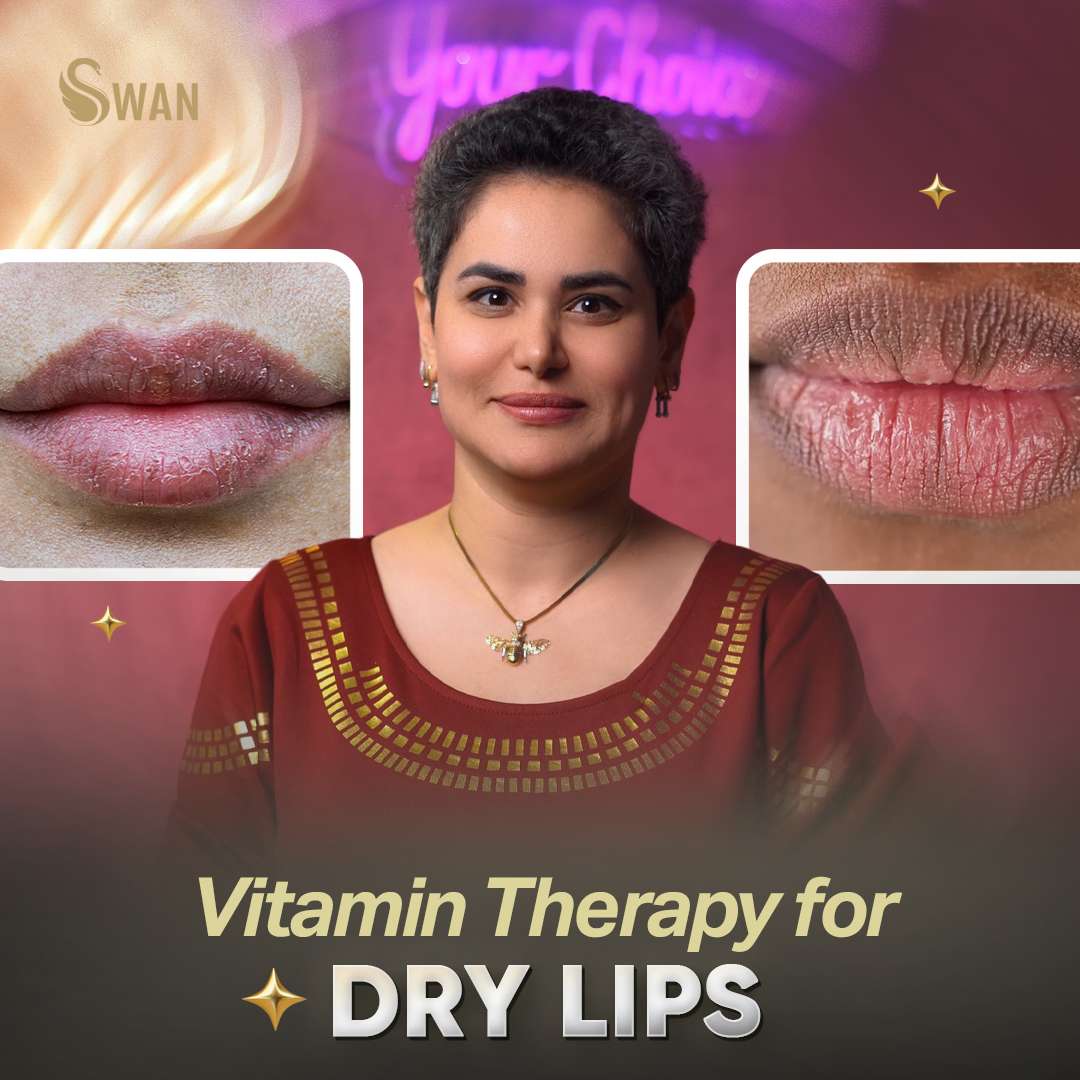
Dry Lips Treatment in Dubai: Vitamin Lip Therapy with SkinFill Bacio
Lips have no oil glands. Every other area of the face has some way of sealing in moisture, and the l

Vitamin Therapy
At Swan Aesthetic Clinic, Dubai, our Vitamin Therapy is a testament to our belief in nourishing the

Under Eye Brightening and Dark Circle Treatment
At Swan Aesthetic Clinic, Dubai, we understand the impact that dark under-eye circles can have on yo


