
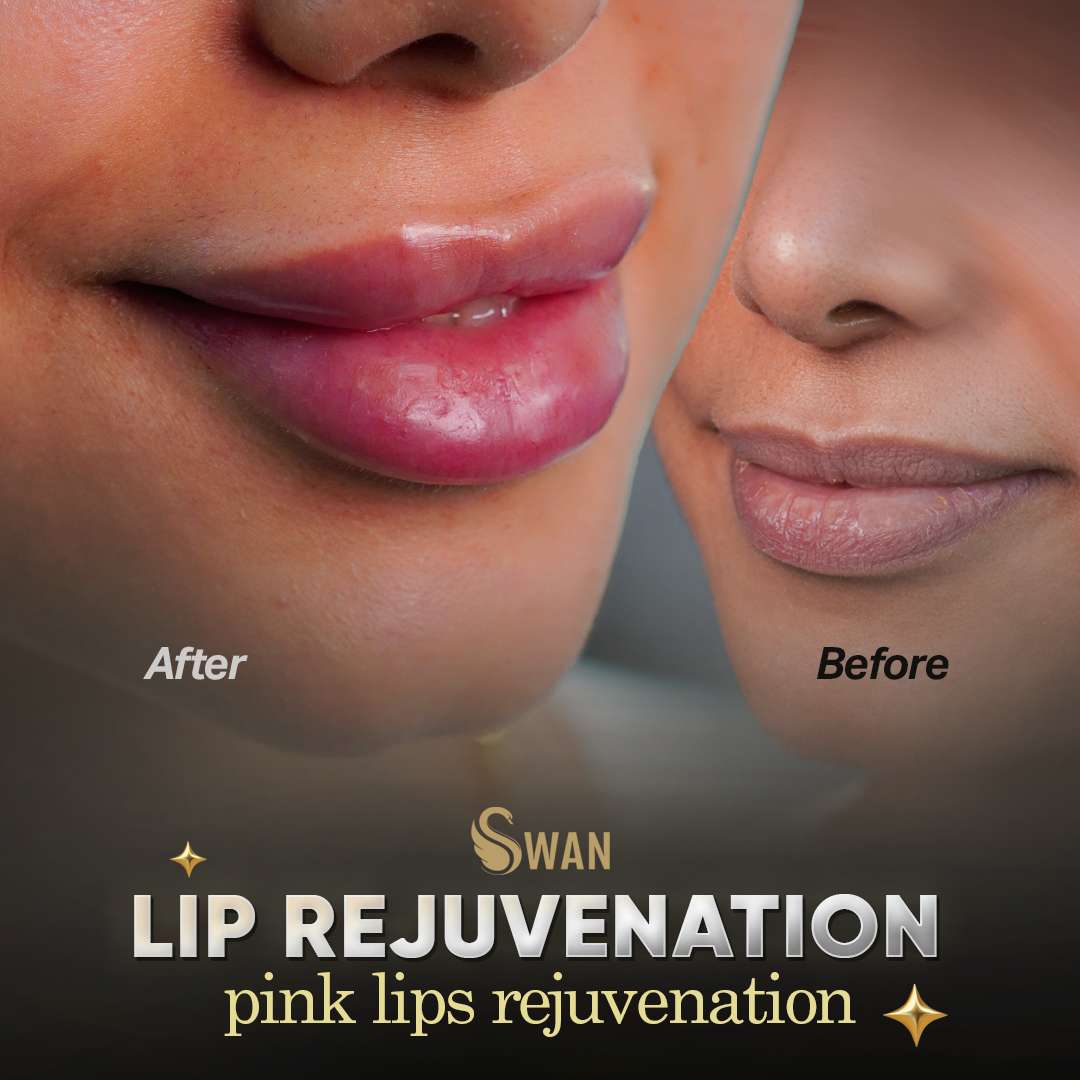
Lip Rejuvenation Dubai – How Hyaluronic Acid and Vitamin Boosters Bring Back Natural Pink Lips
Dubai’s air conditioning is set colder than almost anywhere else in the world, and the trade-off shows up first on the lips. No oil glands, no real way to hold moisture, and a daily swing between arctic offices and outdoor heat that most skin never has to survive.
By the time someone notices their lips look thinner and duller in photos, that swing has usually been running for years.
Two treatments, one result
The treatment shown here pairs two different approaches rather than relying on one alone. A hyaluronic acid filler restores structure and volume where lips have thinned or lost definition.
A vitamin-based lip booster works on something different: hydration and surface quality, the part responsible for that plump, healthy pink tone rather than a matte or dry appearance. Used together, the filler shapes and the booster refreshes.
Clients often notice their lips look like a better version of what they already had, not a different shape entirely.
Why lips age in two directions at once
Volume declines gradually from the mid-twenties onward, as the body’s own hyaluronic acid production slows. At the same time, the surface loses some of its natural color and hydration, especially with prolonged sun exposure or dehydration.
Addressing only one of those changes tends to leave a result that looks partially finished. Addressing both is closer to what actually restores the appearance clients mean when they ask for rejuvenation rather than volume.
The hyaluronic acid component is placed along the lip border and body, restoring definition to the cupid’s bow and correcting asymmetry where one side sits naturally fuller than the other. Because hyaluronic acid binds water within the tissue, it adds structure and a degree of hydration on its own.
The vitamin booster layered on top extends that hydration further and supports the lip’s natural color, addressing the dullness or slightly grayish tone that dehydrated lips often develop. Anyone weighing structure against surface quality can review Swan’s guide to lip filler to see how the two are typically balanced.
Who tends to book this
Requests generally fall into two overlapping groups. Some clients are addressing thinning that’s developed gradually and want structure restored without a dramatic shape change.
Others are less concerned with volume and more focused on the surface: dry, tired-looking lips that don’t respond to lip balm the way they used to, particularly after a summer spent mostly indoors under air conditioning. The combination suits both, since it’s rare for either concern to show up entirely on its own by the time someone books a consultation.
A few signs tend to indicate the combined approach is worth discussing rather than filler alone.
- Lips that look thinner in photos than they feel to the person looking in the mirror, often the first sign volume has changed gradually.
- A dull or uneven tone that persists even with regular lip care at home, something Swan’s lip brightening approach addresses on its own when tone is the main concern.
- Fine vertical lines along the upper lip border, sometimes called lipstick lines, which respond well to the combined hydration and structural approach.
- A noticeable difference in fullness between the upper and lower lip that a client has usually spotted in photos before mentioning it out loud.
None of these signs call for the same treatment plan across every face. A practitioner assessing lip shape, skin quality, and how someone’s face moves when they speak will calibrate differently than a fixed protocol ever could.
Does more product mean an overdone look?
Generally not, and this comes down to dosing and technique rather than the combination itself. A 2024 case series evaluating hyaluronic acid for lip redefinition found that the large majority of patients reported meaningfully improved appearance, with high satisfaction scores specifically around naturalness, not just volume, and no moderate or severe adverse events across the group.
That outcome depends on the same principle governing any filler treatment: proportion calibrated to the individual face rather than a fixed amount applied uniformly. For anyone nervous about being unable to adjust course afterward, a hyaluronidase enzyme can reverse hyaluronic acid filler directly, which Swan’s filler dissolve option exists for, though most clients never end up needing it.
Recovery in a city built around heat
Some swelling is normal immediately after treatment, often more noticeable with lips than other filler areas since the tissue is thinner and more visible. Most of that settles within two to three days.
Cold compresses in the hours after treatment help manage swelling. Avoiding intense heat, including saunas, steam rooms, and extended sun exposure, for at least 24 to 48 hours keeps blood flow from working against the healing process.
This is where Dubai’s environment adds a specific consideration. Direct sun and high heat both increase swelling, and given how much of the day here involves full sun or a beach and pool setting depending on the season, timing the treatment away from an immediate outdoor event tends to give better results.
Clients planning around a specific occasion generally do better scheduling ten days to two weeks ahead rather than the day before. Staying hydrated afterward supports both the filler’s settling and the booster’s effect on surface quality, since the two work most visibly together when the lips aren’t fighting dehydration from the outside.
Booking a consultation at Swan Aesthetic Clinic Dubai
Results from the hyaluronic acid component generally last between six and twelve months depending on the individual, while the hydration benefit from the vitamin booster tends to need more frequent refreshing to maintain that surface glow specifically. Clients weighing where to start, structure, hydration, or both, are welcome to reach the team through Swan’s contact page to book a consultation built around what their own lips actually need.
Read Recent Articles
Lip booster treatment Dubai — what SkinFill Bacio does and who it is for
A lip booster treatment works differently from a filler, and that difference is worth understanding


