
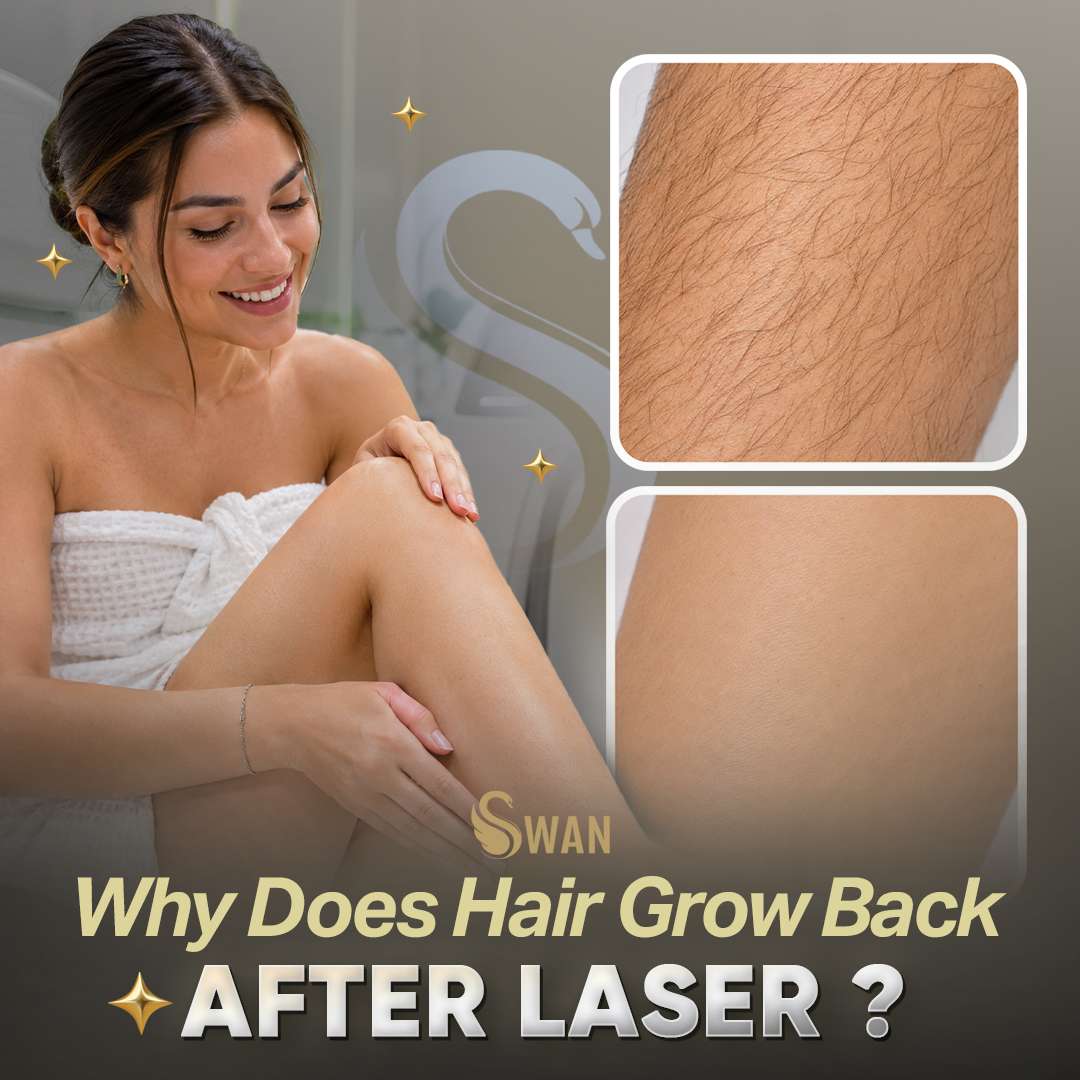
Why Does Hair Grow Back After Laser? What Happens Between Sessions in Dubai
Session seven is where the doubt tends to creep in. The first few appointments went better than expected, the middle stretch felt almost finished, and then a scattering of new hair appears on skin that looked clear a month earlier. Clients ask whether the laser has stopped working. It hasn’t. Hair grows back after laser for reasons that have more to do with how follicles behave than with the treatment itself, and knowing those reasons is what keeps a good result from turning into a disappointing one.
View this post on Instagram
What the first three sessions do
Laser hair removal sends light into the skin, where the pigment in each hair absorbs it and turns it into heat. That heat damages the follicle’s ability to produce new hair. The catch is timing. A follicle can only be disabled during its active growth phase, called anagen, when the hair is still attached to the root and carries the most pigment.
In the first three sessions, a large share of follicles are in that phase at once, so the drop in growth is dramatic. Clients notice patchy areas within two or three weeks, then sparser, finer regrowth that takes longer to come through. Coarse, dark hair on lighter skin responds fastest, because the contrast gives the laser a clear target. In Dubai, where shaving every other day is the norm from April to October, that early change is felt immediately, and it is the most satisfying stretch of a laser hair removal course, well before the slower middle sessions begin.
One detail catches people out. Treated hairs shed over the following one to three weeks, and while they work their way out of the skin they can look exactly like regrowth. They aren’t. A gentle exfoliation in the shower helps them along.
The quiet stretch between sessions three and six
Between the third and sixth sessions, many clients see very little hair at all. Some areas look finished.
This is the point where people think about stopping, and it is where most courses are abandoned. Should you stop at session four if the skin looks clear? Not yet. A smooth surface only tells you about the hair you can see. Beneath it, a portion of follicles are resting in what are called the catagen and telogen phases. They have no active hair for the laser to find, so they pass through the early sessions untouched. They have not been treated. They have simply been waiting their turn.
Why hair grows back after laser around session six or seven
Around the sixth or seventh session, some of those resting follicles move back into active growth, and new hair appears. To someone who expected a steady decline, it looks like a step backward. It is the cycle catching up.
Different parts of the body run on different clocks. A 2022 systematic review of controlled trials found that long-term hair reduction was greatest on areas with longer growth cycles, such as the legs, and lowest on the face, where the cycle is shorter. The face also responds to hormones more readily than most areas, which is part of why the chin and upper lip can be the slowest to settle.
This is why the spacing between sessions matters as much as their number. Appointments set four to six weeks apart for most areas, and sometimes longer for the legs and back, are timed to meet follicles as they wake. Booking closer together does not speed anything up. It reaches the same follicles at the wrong stage.
A small number of clients notice new hair just beyond the edge of a treated zone, in skin that was never targeted. It is rare, and an experienced practitioner will recognize it and adjust the settings or the treatment plan.
How much reduction is realistic
Laser does not remove every hair forever, and a clinic that promises that is promising too much. The same review reported long-term reductions ranging from roughly 30% to 84%, depending on the device and the body area. In Swan’s experience, clients who complete a full course reach a reduction of around 70% or more, depending on the person, and what remains grows back finer, lighter and slower.
That remaining hair is where honest expectations matter. Six to eight sessions is the usual course, followed by a touch-up every six to twelve months for most people. Think of a full course as a reset that needs occasional attention. For most clients, that means a few minutes in the chair once or twice a year rather than a razor every other morning.
A touch-up is the same appointment as any other session in the course, only shorter, because there is far less hair to treat. Most clients book one when a few stray hairs start to reappear rather than on a fixed date, and for some areas a single visit a year is enough to keep the skin smooth.
Hormones, genetics and the hair laser cannot reach
Some regrowth has nothing to do with the hair cycle at all. Hormones can switch on follicles that were never active before, which means new hair in an area the laser has already treated, rather than old hair returning. For men, testosterone keeps adding hair to the back, shoulders and neck well into the thirties and forties.
This is especially relevant for women in the UAE. A 2024 study comparing female medical students in the UAE and Oman found polycystic ovary syndrome (PCOS) in 27.6% of the UAE group, and excess facial or body hair in 32% of Emirati students. Hormonal hair of this kind does respond to laser, but it keeps getting new instructions from the body.
A handful of factors decide how much hair returns once a course is complete:
- Hormonal conditions such as PCOS and thyroid changes can activate dormant follicles on the face, neck and body, and these areas need ongoing care alongside medical management.
- Pregnancy and menopause shift hormone levels enough to bring back hair on the face, abdomen or chest, even after a course that went well.
- Genetics shape how dense the follicles are and how strongly each one responds to hormones, which is why family patterns tend to repeat.
- Significant weight gain can push hormone levels in a direction that favors new growth, and the study above found weight to be a strong predictor of PCOS symptoms.
- Very light, red or grey hair carries little pigment, so it gives the laser almost nothing to absorb.
None of this means the laser has failed. It means a good plan accounts for these factors from the start, and that sudden new growth is sometimes worth checking with a doctor before more sessions are booked.
Spacing laser hair removal sessions around Dubai life
The gap between appointments is where most courses drift off track, and life in Dubai makes that easy. Summer travel can stretch a planned four weeks into ten. A beach weekend at JBR the week before a session leaves skin tanned, and while laser can still be performed on tanned skin with the right settings, the practitioner needs to know before treatment begins. Swan’s laser options are chosen for exactly this range of skin tones and sun exposure.
Between sessions, shave the area rather than waxing, plucking or threading. Those methods pull out the root the laser needs to find, which sets the next session back. Avoid sunbeds and self-tanner, wear a broad-spectrum sunscreen on any treated area that sees daylight, and keep hot showers, saunas and hard workouts to a minimum for a day or two after each appointment. The constant move between outdoor heat and air-conditioned offices in Business Bay or Downtown can leave freshly treated skin feeling tight and reactive, and a plain, fragrance-free moisturizer settles it. If travel is coming up, plan the sessions around the trip rather than squeezing one in the day before a flight.
Clients who want to read more about comfort, skin tones and timing will find the clinic’s common laser questions answered in more detail on the blog.
Planning a full course at Swan Aesthetic Clinic Dubai
A course that reaches session seven with realistic expectations is one that was planned properly at the first visit. At Swan, that consultation looks at hair color and thickness, skin tone and recent sun exposure, the body areas involved, and any hormonal history that might affect how hair behaves over the next year. The practitioner maps out the intervals, explains when regrowth is likely to appear, and is clear from the outset about touch-up sessions, so nothing about session six or seven comes as a surprise.
If you have started a course elsewhere and stalled, or you are seeing hair return and want to know why, the team can review where you are and what the next sessions should look like. To arrange a visit, you can book a consultation with the clinic in Al Karama and start with an honest assessment of what laser can do for your skin.
Note: This article is intended for educational purposes only and does not replace a professional medical consultation. Individual results may vary, and all treatments should always be carried out under qualified medical supervision.
Read Recent Articles

Can Laser Hair Removal Help with Ingrown Hairs? The Key to Smoother, Healthier Skin
Ingrown hairs can be a persistent and frustrating problem, often leading to redness, irritation, and

Top 10 Questions About Laser Hair Removal at Swan Aesthetic Clinic Dubai
Laser hair removal has become one of the most popular aesthetic treatments in Dubai, thanks to its l

Laser Hair Removal
which kind of technology we use? And how many sessions we need? how many days you need will be pat


